Construction dominates the conversation about workplace death in New York City. Every scaffold collapse and crane failure makes the news. Thirty workers in construction and extraction occupations died on the job in NYC in 2023.
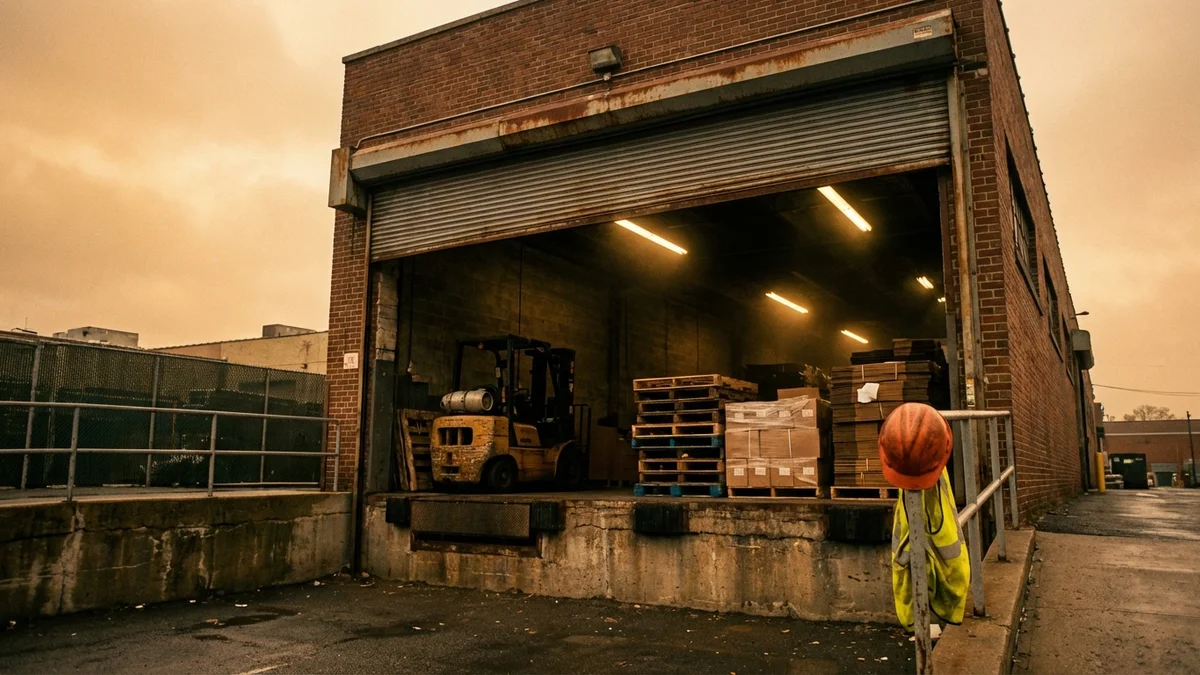
But 39 others died too. They worked in warehouses, drove delivery trucks, served food, stocked shelves, and cleaned buildings. Their deaths rarely made headlines.
The Bureau of Labor Statistics Census of Fatal Occupational Injuries counted 69 total fatal work injuries in New York City in 2023. Here is what happened outside the hard hat.
How 69 Workers Died
The BLS breaks fatal work injuries into categories by event. Two causes tied for the most deaths in NYC in 2023.
| Cause of Death | Fatalities | Share |
|---|---|---|
| Falls, slips, and trips | 19 | 27.5% |
| Exposure to harmful substances/environments | 19 | 27.5% |
| Transportation incidents | 13 | 18.8% |
| Violence and other injuries by persons or animals | 12 | 17.4% |
| Contact with objects and equipment | 6 | 8.7% |
| Total | 69 | 100% |
Falls are the expected killer. They are the leading cause of death on construction sites, and 14 of the 19 fall fatalities in 2023 were in construction or extraction occupations.
The 19 deaths from exposure to harmful substances tell a different story. This category includes drug overdoses on the job, chemical exposures, oxygen deficiency in confined spaces, and heat-related deaths. These fatalities are concentrated outside construction.
Where Workers Died: Industry Breakdown
Construction and extraction occupations accounted for 30 of 69 deaths. The remaining 39 broke down across multiple sectors.
| Occupation Group | Fatal Injuries |
|---|---|
| Construction and extraction | 30 |
| Transportation and material moving | 9 |
| Food preparation and serving | 3 |
| Sales and related | 3 |
| Installation, maintenance, and repair | 3 |
| All other occupations | 21 |
Wage and salary workers accounted for 63 of the 69 fatalities. Six were self-employed.
Transportation and Warehousing: The Rising Killer
In 2022, transportation and warehousing killed 15 NYC workers, triple the 5 who died in that sector the year before. The industry count eased back in 2023, but the human toll inside the sector keeps climbing where it is hardest to count: app-based delivery.
The sector includes truck drivers, delivery workers, warehouse employees, and transit operators. Three forces are driving injuries and deaths upward.
The delivery worker crisis. App-based delivery workers died at an accelerating rate in recent years: 5 in 2022, 7 in 2023, and 10 in 2024.
Most were immigrant workers on e-bikes and mopeds navigating the same streets as commercial trucks and buses. They are classified as independent contractors, which means no workers’ compensation, no employer safety training, and no OSHA coverage.
The warehouse boom. New York State warehouse workers experienced an injury rate of 8.8 per 100 full-time workers in 2022, which is 54% higher than the national warehouse rate of 5.7.
Amazon drives much of that gap. New York Amazon workers logged serious injuries at a rate of 7.8 per 100, against 5.6 for workers in similar jobs at other companies.
The state warehouse injury rate more than doubled between 2017 and 2022, climbing from 3.6 to 8.8 cases per 100 workers.
Last-mile delivery facilities. The NYC Comptroller’s November 2025 report found that 76% of the 50 last-mile delivery warehouses in the city had OSHA-reported injuries between 2022 and 2024.
Those 38 facilities generated over 2,000 injury reports, an average of 678 per year across all of them combined. Injury rates at these facilities run 3x the national average.
Workplace Violence: 12 Dead
Twelve NYC workers were killed by violence on the job in 2023. In the broader 2022 data, violence and other injuries by persons or animals accounted for 27 fatalities citywide, the single largest cause of workplace death that year.
Food service workers accounted for a disproportionate share. Four of the 8 food service fatalities in 2022 were violence-related.
The BLS data does not distinguish between customer violence, robbery, and coworker incidents. But the pattern is clear in high-cash, late-night, public-facing jobs: bodegas, restaurants, delivery routes.
Who Dies: Age and Employment Status
Workers aged 55 to 64 accounted for 27 of the 69 fatalities in 2023, the largest share by age group. Workers aged 45 to 54 accounted for 13.
These are experienced workers. The data does not support the assumption that workplace deaths happen to new or untrained employees. Older workers fall harder, recover slower, and are more susceptible to environmental exposures.
Nonfatal Injuries: 122,400 in One Year
The fatal count is the sharp edge. The broader injury picture is massive.
The New York State Survey of Occupational Injuries and Illnesses reported 122,400 nonfatal workplace injuries and illnesses among private employers in 2024, at a rate of 1.9 cases per 100 full-time workers. Injuries accounted for 93.9% of recorded cases.
| Sector | Incidence Rate (per 100 workers) |
|---|---|
| Trade, transportation, and utilities | 2.8 |
| State and local government | 5.7 |
| Financial activities | 0.4 |
| Private industry overall | 1.9 |
The 71,600 cases involving days away from work, job transfers, or restrictions represent real income loss. Workers’ compensation benefits in New York cover two-thirds of average weekly wages, up to a maximum of $1,222.42 per week as of July 2025.
For warehouse workers, delivery drivers, and food service employees earning near minimum wage, even partial wage replacement leaves families in financial distress.
The Legal Gap
Construction workers have Labor Law § 240(1), the Scaffold Law, which imposes absolute liability on property owners and contractors for gravity-related injuries. No other industry in New York has anything comparable.
Workers in transportation, warehousing, food service, and retail face a different legal landscape:
Workers’ compensation provides medical coverage and partial wage replacement but bars lawsuits against the employer. Benefits are capped. There is no recovery for pain and suffering.
Third-party claims are the path to full compensation. If a delivery truck driver is hit by another vehicle, they can sue that driver. If a warehouse worker is injured by defective equipment, they can sue the manufacturer. If a restaurant worker is assaulted due to inadequate security, they can sue the property owner.
Independent contractor misclassification is the biggest barrier. App-based delivery workers, gig economy drivers, and subcontracted warehouse temps are frequently classified as independent contractors, cutting them off from workers’ comp entirely.
New York’s Fair Play Acts already presume employee status for construction and commercial-goods transportation workers, and courts apply a multi-factor test to misclassification claims in other sectors. Whether a given worker was misclassified turns on the facts of the job, so the label an employer assigns does not control.
The Pattern
Construction gets the attention because its deaths are dramatic: crane collapses, scaffold failures, falls from height. The regulatory infrastructure reflects that attention: OSHA construction standards, DOB enforcement, Labor Law 240.
But 39 of 69 workers who died on the job in NYC in 2023 were not in construction. They were driving trucks, sorting packages, cooking food, making deliveries, and stocking shelves. Their jobs are getting more dangerous, not less.
Warehouse injury rates in New York are 54% above the national average and rising. Delivery worker deaths have doubled in two years.
The data is public. The pattern is clear. The question is whether the regulatory response will match what the numbers show.