
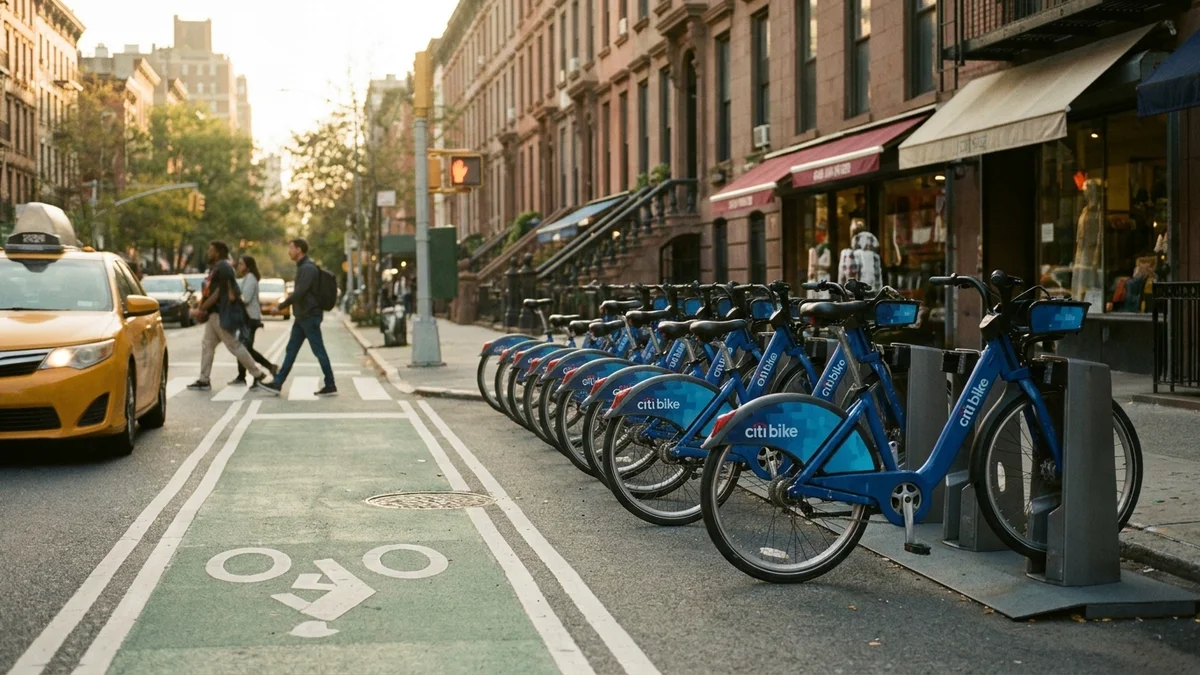
Two numbers tell the story of cycling in New York City right now.
Traditional-bicycle rider deaths fell to a record low in 2025, with 3 riders killed through the third quarter, down from 5 over the same period in 2024. Traditional-bicycle injuries still ran to 4,461 citywide in 2024. More riders, fewer fatal collisions, a high baseline of injuries.
The progress on protected lanes and Vision Zero infrastructure is real. The injury count says the system is still under stress.
For Citi Bike riders specifically and for users of NYC’s expanding dockless e-bike fleet, the liability map is more complicated than the headline numbers suggest. The user agreement contains language about waiving liability. The motorist who doors a rider has different exposure than the bike-share company that maintained the bike.
New York’s statute book treats them differently. Knowing where each line falls is the difference between a clean recovery and a denied claim.
What the 2024-2025 NYC Data Shows
These figures come from the NYC DOT 2024 Bicycle Crash Data Report (full calendar 2024) and NYC DOT Vision Zero data for 2025. The DOT report counts traditional bicycles separately from motorized two-wheelers, so the numbers below are traditional-bicycle riders unless noted.
| Metric | 2024 | 2025 |
|---|---|---|
| Traditional-bicycle deaths (citywide) | 6 | 3 (through Q3, record low) |
| Traditional-bicycle injuries (citywide) | 4,461 | (data pending) |
| Brooklyn traditional-bicycle deaths | 3 | (data pending) |
| Brooklyn traditional-bicycle injuries | 1,560 | (data pending) |
| Motorized two-wheeler injuries (citywide) | 5,691 | (data pending) |
Brooklyn leads the boroughs on traditional-bicycle injuries. Downtown Brooklyn, Williamsburg, Bushwick, East Flatbush, and Sunset Park are the concentration zones. The borough’s combination of bike volume, truck routes, and corridors that haven’t yet been redesigned drives the count.
The motorized-two-wheeler column tells the harder story. That category, which folds in e-bikes and mopeds, carried 5,691 injuries citywide in 2024, more than the traditional-bicycle count. For Citi Bike riders, the relevant split is that classic pedal bikes and pedal-assist e-bikes both ride in the same lanes and face the same motorist threats.
Single-bicycle crashes, the ones with no motor vehicle involved, accounted for a smaller share of the harm. Pothole impacts, mechanical failures, and surface conditions are the typical causes. For Citi Bike riders, this category puts the focus back on Lyft Bikes LLC’s maintenance obligations.
The Two Confirmed Citi Bike Fatalities
Citi Bike does not publish per-system fatality counts. The publicly documented user deaths surface through news coverage and litigation reporting.
June 12, 2017, Chelsea
Dan Hanegby, 36, became the first documented Citi Bike user fatality. A bus struck him while he tried to avoid a parked vehicle on West 26th Street.
February 2024, Williamsburg
A 64-year-old Citi Bike rider was killed on Broadway near Lorimer Street when a driver opened a car door into his path.
Two confirmed deaths is a low absolute number relative to the system’s billion-plus rides since 2013. It also reflects a reporting gap rather than a complete count.
NYC DOT crash data treats Citi Bike rides as bicycle rides without flagging the bike-share status. A Citi Bike user struck by a motorist appears in the cyclist-fatality column, not a Citi Bike column. The two-fatality number we cite is a floor, not a ceiling.
What Causes the Crashes
The NYC DOT 2024 Bicycle Crash Data Report breaks the harm down by whether a motor vehicle was involved. The split is the part that matters for liability.
Of the 4,461 traditional-bicycle injuries citywide in 2024, the large majority happened in crashes involving a motor vehicle. The same report shows 5,691 injuries involving motorized two-wheelers, again concentrated in motor-vehicle collisions. Crashes with no motor vehicle, the single-bicycle and bike-on-bike events, made up the smaller share.
The pattern is consistent. The motorist is the primary cause of severe cyclist harm. The bike-share company’s liability exposure is comparatively narrow.
The Lyft Bikes LLC Liability Question
Citi Bike is operated by Lyft Bikes LLC. Every user signs a membership or single-ride agreement that includes liability language. The enforceability of that language under New York law is shaped by General Obligations Law § 5-326.
Section 5-326 limits exculpatory clauses in recreational activity agreements. The statute prohibits parties from waiving liability for ordinary negligence in many recreational settings, though it permits waivers that cover inherent risks of the activity itself.
The available reporting we surveyed does not contain a New York Appellate Division decision interpreting General Obligations Law § 5-326 specifically against the Citi Bike user agreement.
The case law in adjacent recreational settings, gym memberships and ski resorts in particular, points in a clear direction: courts read § 5-326 broadly to protect injured users from waiver clauses that try to absolve operators of their own negligence.
What this means in practice for a rider hurt by a Citi Bike mechanical failure:
- A waiver does not shield Lyft Bikes from claims based on gross negligence or willful misconduct.
- A waiver does not shield Lyft Bikes from a duty to maintain equipment in safe condition.
- A waiver does not waive a duty to warn about known hazards.
- A waiver may cover risks inherent to cycling itself, falls, collisions with other cyclists, and similar situations the rider voluntarily assumed.
For a rider hurt by a motorist while on a Citi Bike, the waiver question rarely controls anything. The claim runs against the at-fault driver under standard New York motor vehicle liability rules.
Motorist Liability and What Cyclists Can Recover
Cyclists struck by motorists in New York pursue recovery under the same framework that covers any other vulnerable road user.
Economic Damages
Medical expenses, lost wages, rehabilitation costs, and bicycle property damage. For Citi Bike users, the bike itself is the company’s property and not the rider’s, so the property damage element typically focuses on personal items and medical equipment.
Non-Economic Damages
Pain and suffering, permanent disability, disfigurement, and loss of enjoyment of life.
Punitive Damages
Available in cases of gross negligence or reckless conduct, which is rare but not unheard of.
The at-fault driver’s auto liability insurance is the primary recovery source. New York requires minimum bodily injury coverage of $25,000 per person and $50,000 per accident. That floor is often inadequate for serious cyclist injuries, which is where uninsured and underinsured motorist coverage on the cyclist’s own auto policy or household policy comes into play.
New York applies comparative negligence under CPLR § 1411. A cyclist who is found partially at fault recovers with damages reduced by the assigned percentage.
A rider who failed to signal a turn but was hit by a speeding driver running a red light could be assigned 10% of fault, leaving 90% of damages on the table.
One caution: for lawsuits filed on or after May 26, 2026, Bill A10008 (Chapter 58 of 2026) added CPLR § 1411(b), which bars recovery in motor vehicle cases when the injured person’s fault is greater than the combined fault of the defendants.
Insurers know all of this, which is why early documentation of the crash scene matters.
What Riders Should Do After a Crash
Five steps protect a claim.
Get Medical Care, Even When You Feel Fine
Adrenaline masks injuries. Concussions and soft-tissue damage often present hours or days later. The same-day medical record is the strongest evidence of causation when a carrier or defense expert later argues the injury came from something else.
Document the Scene
Photos of the bike, the vehicle, the road conditions, the lane markings, any debris, and any visible injuries. If you were on a Citi Bike, photograph the bike’s serial number and the dock you took it from.
Get the Driver’s Information and Any Witness Contact Details
Police reports get the basics. Witness contact info often gets lost in 24 hours.
Preserve the Trip Data
If you were on a Citi Bike or a dockless e-bike, take screenshots of the rental in the app, including the timestamp and the bike ID. These document the activity. If the bike had a mechanical issue, that record matters.
Know the Deadlines
Three years on personal injury claims under CPLR § 214(5). Two years on wrongful death under EPTL § 5-4.1. Notice-of-claim windows are much shorter when a NYC vehicle, an MTA bus, or any government entity is involved, often 90 days under General Municipal Law § 50-e.
What’s Still Unknown
The gap in this story is the missing data set.
NYC DOT does not publish Citi Bike-specific crash counts. Lyft Bikes LLC does not publish member injury reports. The publicly available reporting does not contain the full text of the user agreement’s current liability waiver, and we have not found a New York Appellate Division decision interpreting that waiver under § 5-326.
The differential liability between classic Citi Bike and Citi Bike e-bike, where pedal-assist speeds raise the kinetic energy in any crash, has not been litigated in any reported case we found.
Each of those gaps will close. The system is too large, the ride volume is too high, and the injury count is too consistent for the case law to remain undeveloped much longer.