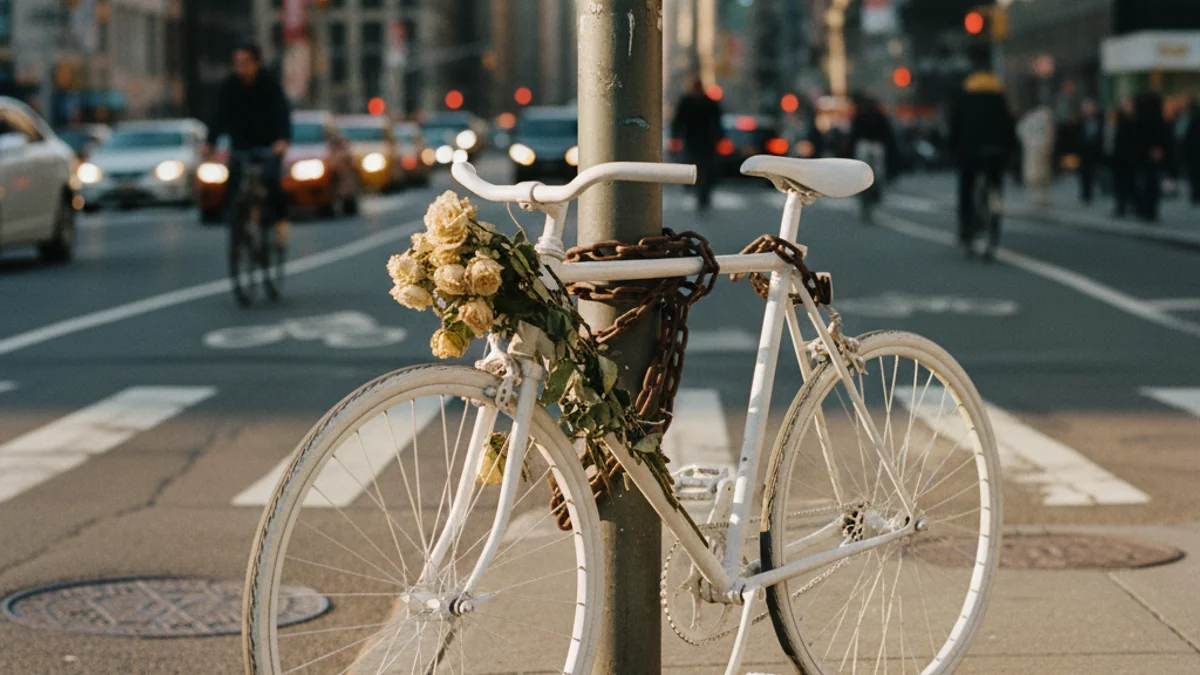
Thirty cyclists were killed on New York City streets in 2023. That was the highest total in 24 years. Of those 30, e-bike riders accounted for 23 deaths, or 77% of all cycling fatalities.
Deaths dropped to 24 in 2024. By the end of 2025, NYC recorded its lowest overall traffic death count on record: 205 total, with traditional cyclist fatalities through the third quarter at just three.
But e-bike collisions rose 21.5% year to date through July 2025, 401 crashes against 330 the year before, even as overall deaths fell. NYC DOT’s January 2026 announcement confirmed the 2025 record.
One pattern holds: cyclists die on wide, unprotected streets where cars move fast and bike infrastructure is absent or inadequate.
The Route-by-Route Picture
Deaths are not random. They cluster on corridors with the same design failures: many travel lanes, high vehicle speeds, and no barrier between bikes and cars.
Queens Boulevard
Queens Boulevard earned the name “Boulevard of Death” for a reason. From 1993 to 2000, 72 pedestrians and cyclists were killed along its 7.5-mile stretch from Long Island City to Jamaica. In 1997 alone, 18 people died.
The city began a full redesign in 2015, adding protected bike lanes, narrowing travel lanes, and upgrading pedestrian signals along the entire corridor. The final phase, from Skillman Avenue to Roosevelt Avenue, was completed in November 2024.
Results: traffic deaths on Queens Boulevard dropped 68%. Overall injuries fell 35%. Pedestrian injuries dropped 45% in redesigned sections. Cyclist volumes increased between 100% and 450% across different segments.
Queens Boulevard is now the longest continuously protected cycling corridor in the city. It is proof that infrastructure works when the investment is real.
Atlantic Avenue, Brooklyn
Atlantic Avenue runs the width of Brooklyn from the waterfront into East New York. It functions as a de facto highway: six lanes of heavy bus, truck, and commercial traffic. The speed limit is 25 mph. Actual speeds are faster.
In October 2024, a 56-year-old cyclist was killed by a hit-and-run driver at Atlantic Avenue and Essex Street in Cypress Hills. He was the 15th cyclist killed in the city that year.
Atlantic and Bedford in Crown Heights is one of Brooklyn’s highest-injury cycling intersections. Phase one safety improvements between Pennsylvania Avenue and Logan Street cut pedestrian injuries 39% and cyclist injuries 14%. Most of Atlantic Avenue remains unprotected.
Tillary Street and Flatbush Avenue Extension, Brooklyn
This is Brooklyn’s most dangerous intersection by crash volume, averaging nearly 180 collisions per year. Tillary Street funnels traffic to and from the Brooklyn and Manhattan Bridges. Cyclists coming off the Brooklyn Bridge bike path into local streets face the highest risk here.
Cars accelerate toward bridge approaches while riders try to navigate lane changes and merge patterns designed for vehicles, not bikes. Vision Zero has designated it a priority corridor, but the intersection geometry remains fundamentally hostile to cycling.
Broadway, Williamsburg to Greenpoint
Broadway from Kent Avenue through Greenpoint is a Vision Zero priority corridor due to concentrated cyclist and pedestrian deaths.
In February 2024, a 64-year-old Citi Bike rider was killed on Broadway near Lorimer Street in Williamsburg. A driver opened a car door into his path, sending him into traffic where a second vehicle struck him. It was the first dooring fatality of 2024.
Over 800 dooring incidents are reported annually in NYC. At least seven fatal dooring crashes occurred in a recent multi-year period, with four in Manhattan and three in Brooklyn.
Second Avenue and Ninth Street, Gowanus
Officials have flagged Second Avenue near Ninth Street in Gowanus as a danger zone for cyclists. Safety fixes have been slow. Riders heading south face turning vehicles and no lane protection.
Northern Boulevard, Queens
Northern Boulevard carries fast traffic through Jackson Heights and Flushing. Wide lanes and heavy truck volume make it one of Queens’ worst cycling corridors. NYC Open Data shows 58th Street and Roosevelt Avenue in Woodside logged 12 cyclist injuries over one five-year period.
The Borough Breakdown
Brooklyn is the deadliest borough for cyclists by every measure.
| Borough | Cyclist Injuries (2024) | Cyclist Deaths (2024) |
|---|---|---|
| Brooklyn | 1,485 | 8 |
| Manhattan | 1,332 | 3 |
| Queens | 787 | 4 |
| Bronx | 451 | 4 |
| Staten Island | 70 | 0 |
Brooklyn leads in raw numbers and fatality counts. In 2023, 12 of 30 cyclist deaths were in Brooklyn. Dense cycling networks sit alongside the city’s widest, fastest roads, many with no bike infrastructure.
Per capita, the Bronx has an outsized injury rate despite a smaller cycling population. Wide boulevards like the Grand Concourse create the same hazards seen on Atlantic Avenue and Queens Boulevard.
What the Infrastructure Data Shows
Protected vs. unprotected streets is the clearest predictor of cyclist safety.
83% of cyclist fatalities in the first half of 2024 occurred on streets without protected bike lanes. Sixty-six percent happened on streets with no bicycle infrastructure at all.
Yet 98% of NYC streets lack a protected bike lane. Nearly half of all existing protected lanes are concentrated in Manhattan.
Where infrastructure exists, it works:
- Ninth Avenue, Manhattan: Protected bike lane reduced cyclist injuries 57% and injuries to all road users by 56%
- Columbus Avenue, Manhattan: Crashes dropped 34%, cycling volumes increased 56% on weekdays
- White Plains Road, Bronx: Parking-protected lanes cut motor vehicle occupant injuries 41%
- Citywide average: Protected bike lanes reduce deaths and serious injuries for all road users by 18.1%
First half of 2024 was the deadliest start in Vision Zero’s history: 127 traffic deaths in six months. SUVs and large vehicles accounted for 94% of non-motorist fatalities, killing nine cyclists.
The Truck Problem
Trucks are disproportionately lethal to cyclists. They make up a small fraction of overall traffic, yet they account for an outsized share of cyclist fatalities.
Blind spots are the core problem. A truck making a right turn cannot see a cyclist alongside the vehicle. Left turns carry the same risk when the cab blocks the driver’s view of the bike lane.
NYC’s Side Guard Law, which requires large commercial vehicles to install side guards to prevent cyclists and pedestrians from being swept under the wheels, has been in effect since 2024. Enforcement data is still limited.
How Crashes Happen
NYPD data breaks down the leading causes of injury-producing bicycle crashes in 2024:
- Driver inattention or distraction: 1,544 incidents
- Failure to yield right-of-way: 648 incidents
- Traffic control disregarded: 288 incidents
- Following too closely: 160 incidents
- 21% of fatal bike crashes involved motor vehicle turns, especially left turns
- Dooring: More than 800 incidents per year citywide
Most cyclist injuries result from driver behavior, not cyclist error. Distraction and failure to yield account for the majority of crashes.
Legal Rights for Injured Cyclists
Cyclists struck by vehicles in New York have strong legal protections.
No serious injury threshold
Unlike car-on-car crashes, cyclists can sue for all damages, including pain and suffering, without meeting the no-fault serious injury threshold. This is the same protection pedestrians receive.
Driver and owner liability
The driver who caused the crash is liable for negligence. Under Vehicle and Traffic Law § 388, the vehicle owner is also liable regardless of who was driving.
City liability for road conditions
If a missing or inadequate bike lane, broken pavement, or obstructed sight line contributed to the crash, the City of New York may share liability. These claims require filing a Notice of Claim within 90 days.
Comparative negligence applies
New York applies comparative negligence under CPLR § 1411. A cyclist who was partially at fault can still recover damages reduced by their percentage of fault.
For lawsuits filed on or after May 26, 2026, Bill A10008 (Chapter 58 of 2026) added one limit: CPLR § 1411(b) bars recovery in motor vehicle cases when the cyclist’s fault is greater than the combined fault of the defendants. Not wearing a helmet does not bar a claim.
Truck and commercial vehicle crashes
When a truck kills or injures a cyclist, multiple parties may be liable: the driver, the trucking company, the vehicle owner, and potentially the company that loaded or dispatched the vehicle.
What to Do After a Cycling Crash
Call 911
Get medical treatment even if you feel okay. Adrenaline masks pain. Internal injuries may not produce symptoms for hours.
Document everything
Photograph the scene: the road, the bike lane (or lack of one), traffic signals, your bike, your injuries, and the vehicle that hit you. Get the driver’s license plate and insurance information.
Preserve the bike
Do not repair or discard your bicycle. It is evidence. The damage pattern shows speed, angle of impact, and force.
Note dooring details
If a car door caused or contributed to the crash, photograph the door position, the vehicle, and the distance between the parked car and the bike lane.
Act fast on government claims
If road conditions contributed to your crash, the 90-day Notice of Claim deadline against the city is strict under General Municipal Law § 50-e. The NYC Open Data Motor Vehicle Collisions dataset lets you or your attorney verify the crash history at any intersection to support a government liability claim.
Frequently Asked Questions
Which NYC borough is most dangerous for cyclists?
Brooklyn leads all five boroughs in both cyclist injuries and fatalities. In 2024, Brooklyn recorded 1,485 cyclist injuries and 8 deaths. Queens ranks second for injuries and fatalities, followed by the Bronx and Manhattan.
Do protected bike lanes reduce cyclist deaths?
Yes. NYC DOT data shows protected bike lanes reduce deaths and serious injuries for all road users by 18.1%. On specific corridors, the results are even stronger. The Ninth Avenue protected lane in Manhattan reduced cyclist injuries by 57%. Queens Boulevard’s full redesign cut traffic deaths by 68%.
Can I sue if I was hit by a car while cycling in NYC?
Yes. Cyclists have the same legal rights as pedestrians under New York law. You can sue for all damages, including pain and suffering, without meeting the no-fault serious injury threshold. Common claims target driver negligence, vehicle owner liability, and city liability for dangerous road conditions.