
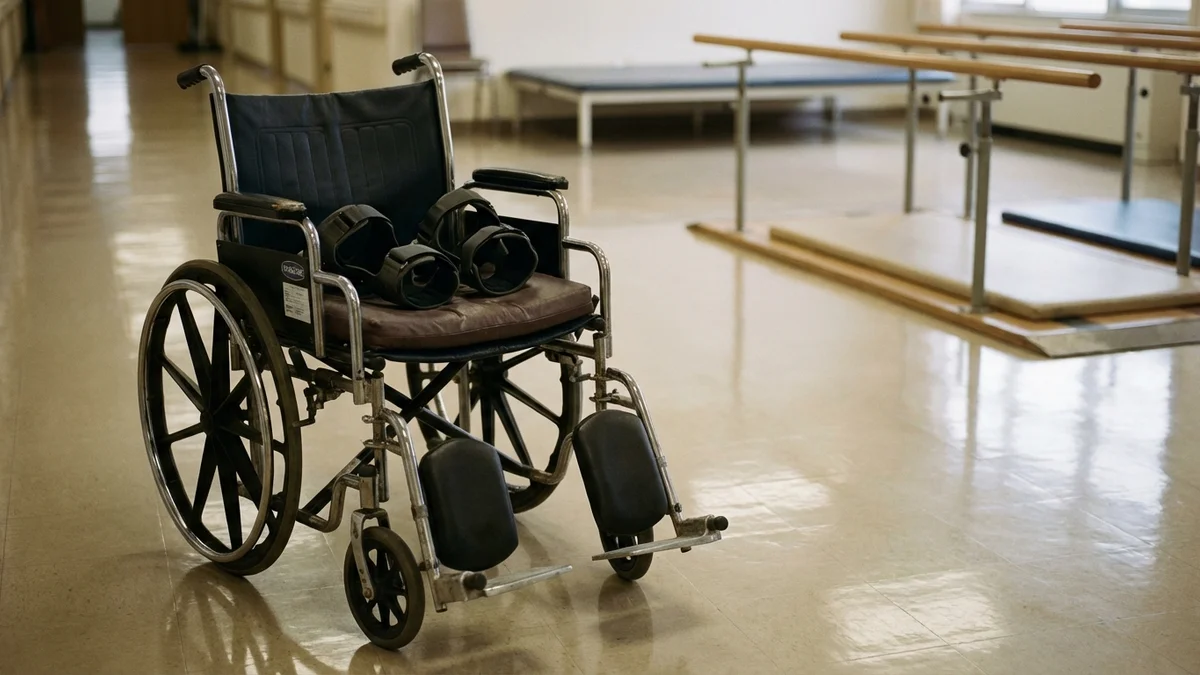
A spinal cord injury divides a life into before and after. The person who entered the emergency room walking may leave in a wheelchair. The construction worker who fell from scaffolding may never stand again. The pedestrian struck in a crosswalk may need 24-hour care for the rest of their life.
The financial reality is equally devastating. A single spinal cord injury can generate millions of dollars in lifetime medical costs, lost income, home modifications, and assistive care. These are among the most expensive injuries in all of personal injury law.
We looked at what spinal cord injuries actually cost, how New York juries value these cases, and what separates a seven-figure settlement from an eight-figure verdict.
Spinal Cord Injury by the Numbers
The National Spinal Cord Injury Statistical Center (NSCISC) at the University of Alabama at Birmingham maintains the most comprehensive SCI database in the country. Current data:
| Metric | Number |
|---|---|
| New SCI cases per year (U.S.) | Approximately 18,400 |
| Americans living with SCI | 259,000 to 394,000 |
| Average age at injury | 44 years |
| Male percentage | 78% |
The age at injury has increased over the decades. In the 1970s, the average was 29. Today it is 44, reflecting the growing role of falls among older adults.
Causes of Spinal Cord Injury
| Cause | Percentage |
|---|---|
| Vehicle crashes | 37.3% |
| Falls | 32.0% |
| Violence (primarily gunshot wounds) | 15.5% |
| Sports/recreation | 7.7% |
| Medical/surgical | 3.7% |
| Other | 3.8% |
In New York City, the distribution shifts. Construction falls account for a larger share than the national average due to the volume of high-rise construction.
Pedestrian impacts are also disproportionately represented. A pedestrian struck by a vehicle at 30 mph faces a significant risk of spinal fracture, and NYC’s pedestrian crash volume is among the highest in the country.
Lifetime Costs by Injury Level
The NSCISC publishes lifetime cost estimates broken down by injury severity and age at injury, all in 2024 dollars per its 2025 data sheet. These figures cover direct health care costs (hospitalization, rehabilitation, equipment, medications, attendant care) and living expenses.
They do not include indirect costs such as lost wages and lost productivity, which the NSCISC reports separately.
First-Year Costs
| Injury Level | First-Year Medical Cost |
|---|---|
| High tetraplegia (C1-C4) | $1,410,163 |
| Low tetraplegia (C5-C8) | $1,018,966 |
| Paraplegia | $687,262 |
| Incomplete motor functional (any level) | $460,224 |
The first year is the most expensive due to acute hospitalization, surgery, ICU care, and intensive inpatient rehabilitation. A person with high tetraplegia may spend months in the ICU on a ventilator before transferring to a specialized rehabilitation facility.
Each Subsequent Year
| Injury Level | Annual Cost (After Year 1) |
|---|---|
| High tetraplegia (C1-C4) | $244,879 |
| Low tetraplegia (C5-C8) | $150,222 |
| Paraplegia | $91,042 |
| Incomplete motor functional (any level) | $55,900 |
Lifetime Costs (Health Care and Living Expenses)
| Injury Level | Age 25 at Injury | Age 50 at Injury |
|---|---|---|
| High tetraplegia (C1-C4) | $6,256,937 | $3,438,706 |
| Low tetraplegia (C5-C8) | $4,571,708 | $2,812,009 |
| Paraplegia | $3,059,615 | $2,007,933 |
| Incomplete motor functional | $2,090,344 | $1,475,423 |
These figures do not include indirect costs (lost wages, productivity), which average $95,309 per year.
A 25-year-old who sustains high-level quadriplegia faces $6.3 million in lifetime health care and living costs, per the NSCISC 2025 Facts and Figures report.
That figure does not include lost wages, and it does not include pain and suffering, loss of enjoyment of life, or loss of consortium. Those are separate damage categories in a New York personal injury lawsuit, and they often exceed the economic damages.
Life Expectancy After SCI
Spinal cord injuries reduce life expectancy. The reduction depends on injury level and completeness:
For a person injured at age 20 who survives at least one year, the NSCISC 2025 data sheet projects these additional years of life (in 2024 data, discounted against the no-injury baseline):
| Injury Level | Remaining Years | Reduction |
|---|---|---|
| No SCI | 57.1 years | Baseline |
| Motor functional (any level) | 48.7 years | -8.4 years |
| Paraplegia (motor complete) | 40.7 years | -16.4 years |
| Low tetraplegia (C5-C8) | 35.5 years | -21.6 years |
| High tetraplegia (C1-C4) | 28.7 years | -28.4 years |
| Ventilator dependent (any level) | 14.2 years | -42.9 years |
The life expectancy reduction is not just about the initial injury. Secondary complications (respiratory infections, pressure ulcers, urinary tract infections, cardiovascular disease) accumulate over time. Ventilator-dependent patients face the most significant reduction, losing more than three decades of expected life.
What Drives SCI Case Value in New York
1. Injury Level and Completeness
The distinction between complete and incomplete SCI is the single largest determinant of case value. A complete injury means total loss of motor and sensory function below the injury level. An incomplete injury means some function remains.
Complete quadriplegia (loss of function in all four limbs) produces the highest verdicts because it requires the most lifetime care: 24-hour attendant care, ventilator management, specialized wheelchair, adapted vehicle, home modifications, and ongoing medical management.
2. Life Care Planning
A life care plan prepared by a qualified expert details every future cost the injured person will incur. Physical therapy, occupational therapy, respiratory therapy, wound care, medication, attendant care (8-hour, 16-hour, or 24-hour shifts), equipment replacement schedules, home modifications, and accessible vehicle costs.
The difference between a strong life care plan and a weak one can be millions of dollars.
Insurance companies routinely challenge the hourly rate for attendant care, the frequency of equipment replacement, and the need for 24-hour vs. 16-hour supervision. The quality of the expert and the specificity of the plan directly affect the verdict or settlement amount.
3. Lost Earning Capacity
A 28-year-old construction worker earning $85,000 per year who becomes a paraplegic has a different economic loss calculation than a 65-year-old retiree. Vocational economists project what the person would have earned over their remaining work life, including wage growth, union benefits, pension contributions, and health insurance.
For high earners and young workers, lost earning capacity alone can reach seven figures.
4. Liability Clarity
Clear, undisputed liability maximizes case value. A construction fall where the scaffold lacked guardrails triggers Labor Law 240 strict liability. A rear-end collision at a red light gives the defense no room to argue comparative fault.
When liability is shared, New York’s comparative negligence rule under CPLR 1411 reduces the recovery by the plaintiff’s percentage of fault.
In motor vehicle lawsuits filed on or after May 26, 2026, CPLR 1411(b), added by Bill A10008 (Chapter 58 of 2026), bars recovery when the plaintiff’s fault is greater than the combined fault of the defendants.
New York SCI Verdict Ranges
| Case Type | Typical Range |
|---|---|
| Incomplete SCI with partial recovery | $500,000 to $3 million |
| Complete paraplegia (T1-T12) | $3 million to $15 million |
| Low quadriplegia (C5-C8) | $8 million to $20 million |
| High quadriplegia / ventilator-dependent | $15 million to $30 million+ |
| SCI wrongful death | $5 million to $20 million+ |
Notable New York SCI verdicts:
Venue matters significantly. Bronx County and Kings County (Brooklyn) consistently produce the highest personal injury verdicts in New York State. The same SCI case may produce a $12 million verdict in the Bronx and a $6 million verdict in a suburban county.
New York has no cap on non-economic damages. Combined with the high cost of living (which drives economic damages higher) and favorable jury demographics in NYC boroughs, this produces SCI verdicts that rank among the highest in the nation.
Common Causes of SCI in NYC
Motor Vehicle Crashes
Car accidents remain the leading cause of SCI among working-age adults. The mechanism involves sudden deceleration or impact forces that fracture or dislocate vertebrae, compressing or severing the spinal cord. Truck and motorcycle crashes produce the most severe spinal injuries due to the forces involved.
Pedestrians struck by vehicles face particular SCI risk. The initial impact often throws the person onto the vehicle hood or windshield, and the secondary impact against the pavement can fracture the cervical spine.
Construction Falls
Falls from heights on NYC construction sites are a leading cause of workplace SCI. A fall from a scaffold, ladder, or roof can produce spinal fractures at any level, from cervical (neck) to thoracic (mid-back) to lumbar (lower back).
New York’s Labor Law § 240(1) provides strict liability for gravity-related injuries on construction sites. The property owner and general contractor are liable regardless of whether the injured worker was partially at fault. This strict liability standard makes construction SCI cases particularly strong from a litigation perspective.
Slip-and-Fall Injuries
Slip and fall accidents can produce SCI, particularly among older adults. A fall from standing height onto a hard surface can fracture vertebrae in someone with osteoporosis or degenerative spinal conditions. These cases are complicated by pre-existing conditions, but New York’s eggshell plaintiff doctrine holds that defendants take their victims as they find them.
Employment After SCI
NSCISC data on employment outcomes underscores the economic devastation:
| Time After Injury | Employment Rate |
|---|---|
| At time of injury | 65% |
| 1 year post-injury | 18% |
| 20 years post-injury | 29% |
Only 18% of SCI survivors are employed one year after injury. Even at 20 years, fewer than one-third have returned to work. The employment rate never recovers to pre-injury levels.
These statistics drive the lost earnings component of SCI cases. When a worker’s career is permanently ended or significantly limited, the economic damages extend across decades.
Workers’ Compensation and SCI
New York workers’ compensation covers medical treatment and partial lost wages for SCI sustained on the job. But workers’ comp does not cover pain and suffering, and wage replacement is capped at $1,222.42/week for injuries on or after July 1, 2025.
For construction workers, a third-party lawsuit under Labor Law § 240(1) typically produces damages far exceeding the workers’ comp claim. The third-party suit covers full lost wages (not the capped workers’ comp rate), pain and suffering, loss of enjoyment of life, and loss of consortium.
If a third party caused the workplace SCI, the worker can pursue both workers’ comp benefits and a separate personal injury lawsuit simultaneously. The workers’ comp carrier holds a statutory lien under Workers’ Compensation Law § 29 and is reimbursed from the third-party recovery.
What to Do After a Suspected Spinal Cord Injury
- Do not move the injured person. Spinal cord damage can worsen with movement. Wait for emergency medical services.
- Call 911 immediately. SCI requires emergency stabilization, imaging, and often surgery within hours.
- Preserve evidence. Photographs of the accident scene, equipment, road conditions, or construction site conditions. Witness contact information. Incident reports.
- Do not give recorded statements to insurance companies. The severity and permanence of SCI may not be fully apparent for weeks or months. Any early statement minimizing the injury will be used against you.
- Consult a lawyer experienced in SCI cases. These cases require specialized medical experts, life care planners, vocational economists, and rehabilitation specialists. The value of the case depends on assembling the right team early.
Our firm has handled spinal cord injury cases across all five boroughs for over 37 years. We work with the medical and economic experts needed to document the full lifetime impact of the injury.
Call 212-221-5999 or request a free case review.