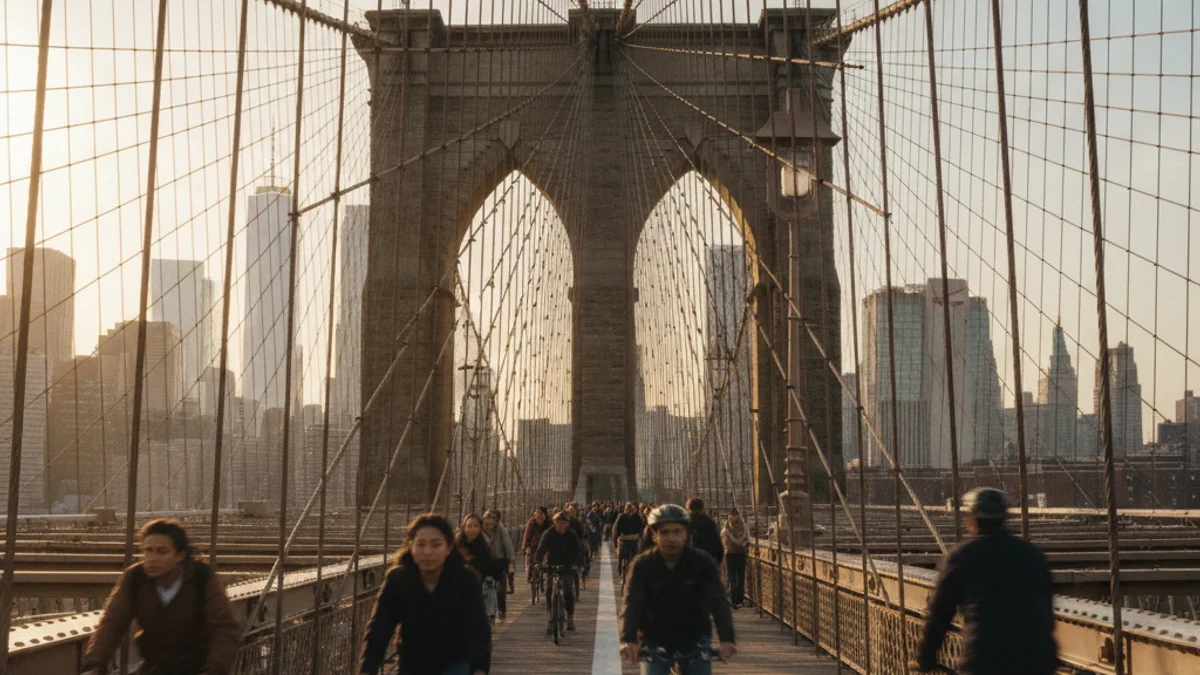
The Brooklyn Bridge carries more than 100,000 vehicles per day. Add thousands of pedestrians and cyclists sharing the crossing, and you have one of the most congested corridors in New York City.
NYPD collision data, available through NYC Open Data Motor Vehicle Collisions, shows a consistent pattern: crashes cluster at the bridge’s approach intersections on both sides. Pedestrians and cyclists bear a disproportionate share of serious injuries.
Where Crashes Cluster
Collision data reveals distinct crash patterns on and around the Brooklyn Bridge.
- Manhattan-side approaches generate the highest collision volume. Bridge traffic feeds into the City Hall area, where vehicles exiting onto Centre Street, Park Row, and the FDR Drive on-ramp compete with pedestrians and cyclists in a compressed space. Left-turn conflicts near Park Row are a recurring problem.
- Brooklyn-side ramps near Tillary Street and Adams Street create a different hazard. Drivers accelerating onto the bridge merge with traffic exiting the BQE, while pedestrians cross at grade level. Vision Zero has classified the Tillary Street corridor as a priority location.
- On the bridge itself, rear-end collisions dominate. Traffic routinely stops and starts across all lanes. The bridge’s surface becomes slippery in rain and freezing conditions, increasing stopping distances.
Pedestrians Face the Greatest Risk
Pedestrians involved in Brooklyn Bridge corridor crashes suffer more severe injuries than those in vehicle-only collisions.
The most dangerous moments for people on foot near the bridge:
- Morning rush (7:30 to 9:30 AM): People crossing to reach the courts, government buildings, and offices around City Hall face turning vehicles exiting the bridge.
- Evening rush (5:00 to 7:00 PM): The reverse flow brings higher pedestrian volumes as commuters crowd the approaches.
- Weekends and holidays: Tourist foot traffic on the bridge path surges. Conflicts between cyclists traveling at speed and groups of slow-moving pedestrians produce falls and injuries.
Most pedestrian crashes near the Brooklyn Bridge involve vehicles making turns. Drivers focused on merging into bridge traffic fail to yield to people in crosswalks. Large vehicle blind spots are the deadliest factor. Trucks and SUVs that can’t see pedestrians beside them during turns account for the most severe injuries.
The Cyclist Picture
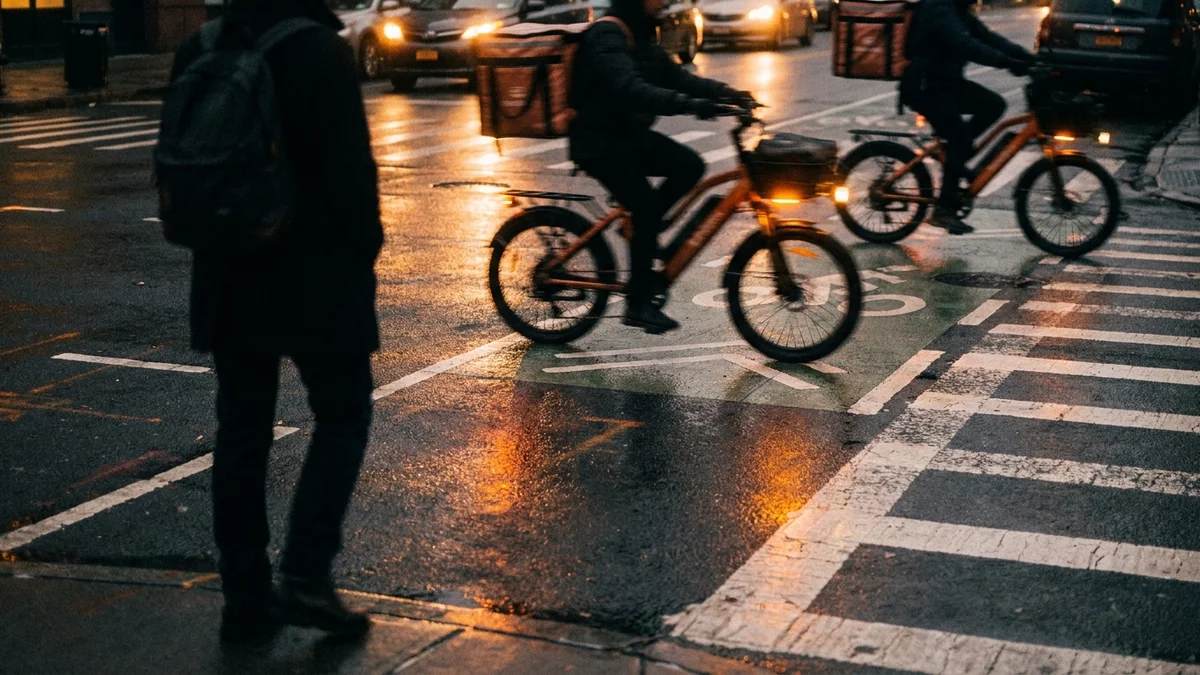
Since the city redesigned the Brooklyn Bridge to give cyclists their own lane on the Manhattan-bound roadway in 2021, cyclist-vehicle collisions on the bridge deck have decreased. The approaches remain dangerous.
On the Brooklyn side, cyclists riding down from the bridge path merge into Tillary Street traffic. It’s a fast-moving, multi-lane road with a history of serious cycling crashes. Riders go from a protected bridge path to unprotected street riding, and that shift catches many off guard.
On the Manhattan side, cyclists exiting the bridge funnel into the bike lane network around City Hall. The transition points where protected bike infrastructure ends and mixed traffic begins are where crashes cluster.
Bike-pedestrian conflicts on the bridge path produce a separate category of injuries. The 2021 redesign improved conditions by separating cyclists from pedestrians, but tourist congestion still forces cyclists to brake suddenly or swerve, resulting in falls that cause broken bones and head injuries.
Why This Corridor Is Dangerous
Several factors converge at the Brooklyn Bridge:
- Old design. The bridge opened in 1883. Its approaches have been rebuilt many times but still lack modern safety features. Merge points are tight. Sight lines are blocked. Crosswalks sit where cars move fastest.
- Tourist distraction. Drivers gawking at the bridge cause rear-end crashes. Walkers on the bridge path stop for photos, causing pile-ups. Millions of tourists visit each year. That volume makes it worse.
- Signal timing that favors cars. Traffic signals at the approaches keep vehicles moving. Pedestrian crossing phases are short. People who can’t cross in time get caught in the intersection.
- Weather and the steel deck. Parts of the roadway are open steel grating, which gets slick in rain, snow, and ice. Ice forms on the bridge before it forms on nearby roads because wind hits the bridge first.
What the City Has Done
NYC DOT has taken several steps to address Brooklyn Bridge safety:
- The 2021 bike lane redesign moved cyclists from the shared upper path to a dedicated lane on the Manhattan-bound roadway, reducing bike-pedestrian conflicts but eliminating a vehicle travel lane.
- Signal timing adjustments at Tillary Street and Adams Street added longer pedestrian crossing phases and leading pedestrian intervals.
- Speed cameras were installed on the bridge approaches.
- Protected bike infrastructure along Tillary Street has been proposed but not yet fully built.
Despite these changes, the fundamental challenge remains: too much traffic of every kind converging at bottleneck points where the bridge meets city streets.
Your Rights After a Brooklyn Bridge Crash
Brooklyn Bridge collisions can involve multiple liable parties:
- Another driver: distraction, failure to yield, or following too closely
- NYC government: dangerous road design, bad signage, signal timing, or failure to maintain the bridge surface
- Vehicle makers: cases involving brake failure or other defects
Claims against the city require filing a Notice of Claim within 90 days under General Municipal Law § 50-e. This deadline is strictly enforced. Missing it can bar your case entirely, regardless of how severe your injuries are.
Pedestrians and cyclists struck by a vehicle are “covered persons” under Insurance Law § 5102(j), so the “serious injury” threshold under Insurance Law § 5102(d) still applies to a claim for pain and suffering.
In practice, the injuries a struck pedestrian or cyclist suffers, fractures, permanent loss of use, and traumatic brain injury, almost always meet that threshold, so it rarely becomes the contested issue.
The personal injury statute of limitations is three years under CPLR § 214(5). Government claims must be filed within one year and 90 days after the date of the incident under General Municipal Law § 50-i, not from when the notice of claim was served.
Frequently Asked Questions
Are Brooklyn Bridge pedestrian crashes increasing?
Results are mixed. While the 2021 redesign improved some metrics, crash volumes at the bridge approaches have not dropped much. Pedestrian-struck crashes remain a persistent problem at turning conflict points on the Manhattan side.
Who maintains the Brooklyn Bridge?
The NYC Department of Transportation is responsible for the bridge’s roadway, signals, and pedestrian infrastructure. The city can be liable for crashes caused by maintenance failures: ice that isn’t treated, potholes on the approaches, malfunctioning signals, or deteriorated lane markings.
What should I do if I’m hit on or near the Brooklyn Bridge?
Call 911 and get medical attention, even if injuries seem minor. Document the scene with photos, including the exact location on or near the bridge. Get the other party’s information and contact details for any witnesses.
Request the NYPD accident report. Do not give a recorded statement to any insurance company before speaking with a lawyer.