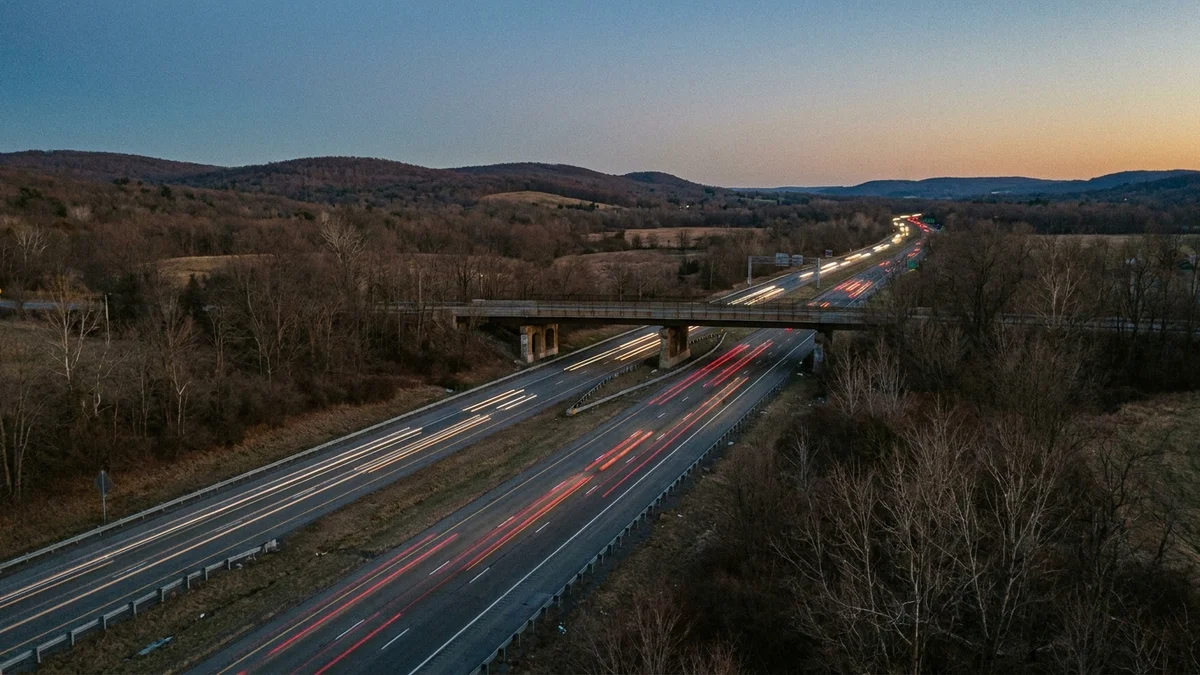
FDR Drive and the Grand Central Parkway combined for 1,569 crashes in 2023. That total included 665 injury crashes and 4 fatalities across two of the most heavily trafficked corridors in New York City. NYPD collision data via NYC Open Data provides the full breakdown by street segment.
Both roads carry over 130,000 vehicles daily. Both were designed decades ago for lower volumes and smaller cars. Both continue to produce serious crashes at rates that place them among the most dangerous expressways in the five boroughs.
FDR Drive: 150,000 Cars on a Road With No Shoulders
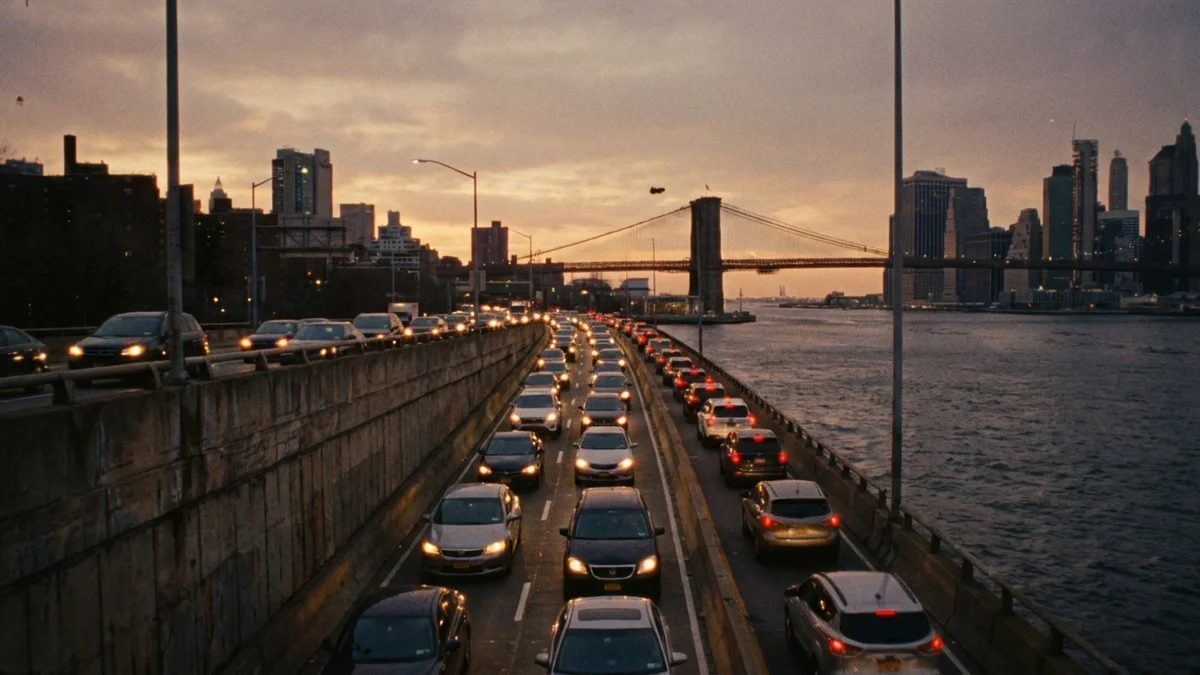
FDR Drive runs 9.68 miles along Manhattan’s east side, from Battery Park to the RFK Bridge at 125th Street. It carries between 130,000 and 150,000 vehicles per day through three lanes in each direction, with a posted speed limit of 40 mph.
In 2023, NYPD data recorded:
- 694 total crashes on FDR Drive
- 273 injury crashes requiring medical attention
- 1 fatality
Those numbers rank FDR Drive fifth among NYC expressways for total crashes and place it firmly among the most dangerous roads in Manhattan.
Design Problems That Kill
FDR Drive opened in stages from the 1930s, built for the cars and traffic volumes of that era, not today’s. Several structural deficiencies make it far more dangerous than its speed limit suggests.
No Shoulders
Most of FDR Drive lacks any shoulder space. When a vehicle breaks down or a crash blocks a lane, there’s nowhere to go. Disabled vehicles sit in live travel lanes, creating chain-reaction collisions.
On highways with full shoulders, drivers can pull off and wait for help. FDR offers no such option.
Narrow Lanes
The drive’s 12-foot lanes provide minimal clearance for modern vehicles. SUVs and delivery vans leave inches of space between adjacent vehicles. At 40 mph in tight quarters, small steering corrections become dangerous lane departures.
Abrupt Entrances and Exits
FDR Drive has 19 numbered exits along its 9.68-mile length. Many have short merge zones that force drivers to accelerate from surface street speeds into highway traffic with limited visibility. Exit ramps appear with little warning, triggering last-second lane changes.
Flooding
Low-lying sections near the East River flood during heavy rain and coastal storms. Standing water causes hydroplaning. The road’s drainage system wasn’t designed for the intensity of modern storms.
Weight Restrictions
An 8,000-pound weight limit north of 23rd Street prohibits buses and most commercial trucks. Despite these restrictions, overweight vehicles regularly access the road. The structural consequences of decades of excess weight show in the road surface.
2025 FDR Crashes: A Deadly Pattern
The first seven months of 2025 produced a string of fatal and serious crashes on FDR Drive. Each one highlighted the road’s unforgiving design.
January 6
A 7-vehicle pileup near Stuyvesant Town injured multiple people. Chain-reaction crashes are a direct consequence of no shoulders and narrow lanes. When one car stops suddenly, the vehicles behind have no escape route.
February 3
A 19-year-old driver was killed near East 75th Street when her Tesla, traveling at high speed, struck a guardrail and burst into flames. The lithium battery ignited, and firefighters fought a stubborn battery fire that flared again after the crash.
High-speed crashes on FDR Drive are particularly lethal. The road’s barriers and lack of runoff areas leave no room for deceleration.
February 4
A woman was killed in a hit-and-run crash near East Houston Street. The driver fled the scene. Hit-and-run crashes on FDR Drive present unique challenges. The road’s limited camera coverage makes identifying fleeing drivers difficult.
February 6
A 61-year-old pedestrian was struck and killed near East 53rd Street by two separate vehicles. Pedestrians on FDR Drive face exposure to high-speed traffic with no buffer zone, whether crossing to reach the East River esplanade or walking from disabled vehicles.
July 24
FDNY firefighter Matthew Goicochea, 31, was killed in a motorcycle hit-and-run on FDR Drive. The crash underscored how the road’s design leaves motorcyclists with zero margin for error.
Five people died on one stretch of Manhattan highway in seven months.
Grand Central Parkway: Queens’ Hidden Danger
Connecting Queens to Long Island, the Grand Central Parkway carries 130,000 vehicles daily on some sections and up to 300,000 on its busiest stretches near LaGuardia Airport.
In 2023, NYPD data recorded:
- 875 total crashes on the Grand Central Parkway
- 392 injury crashes
- 3 fatalities
The Grand Central Parkway produced more crashes and more injury crashes than FDR Drive (392 vs. 273). A higher percentage of GCP crashes result in injuries, a sign that collisions there tend to be more severe.
Built as a Scenic Drive, Used as a Highway
Originally designed as a scenic route with curving roadways and landscaped medians, the Grand Central Parkway made sense in the 1930s. Today, those same curves create blind spots. They force drivers to navigate sweeping turns at highway speeds with limited forward visibility.
Governor Hochul announced $161 million in bridge rehabilitation funding for seven bridges along the Grand Central Parkway. An acknowledgment that the corridor’s aging infrastructure needs significant investment.
Recent GCP Crashes
The Grand Central Parkway’s crash pattern reflects its design problems.
A cross-median crash near 188th Street killed one woman and injured three others. Cross-median crashes happen when vehicles breach the center barrier and enter oncoming traffic. On a road with curving lanes and aging median barriers, these crashes carry extreme force.
A 22-year-old driver was killed in a rollover crash when their Mercedes struck two other vehicles. Rollovers on the GCP often involve the road’s banked curves. Vehicles traveling above the design speed lose traction and flip.
On May 18, 2025, a serious multi-vehicle crash at Exit 23 sent multiple people to the hospital. Exit 23 is one of several GCP interchanges where merging traffic from LaGuardia Airport meets mainline highway traffic in compressed merge zones.
How NYC’s Expressways Compare
NYPD collision data for 2023 ranks the city’s expressways by crash volume. The Grand Central Parkway ranks third citywide, behind only the Belt Parkway and the BQE. FDR Drive sits closer to the middle of the pack. But the roads above them in the rankings all carry significantly more lane miles.
| Expressway | Total Crashes | Injury Crashes | Fatal Crashes |
|---|---|---|---|
| Belt Parkway | 1,338 | 614 | 8 |
| BQE | 904 | 389 | 2 |
| Grand Central Pkwy | 875 | 392 | 3 |
| LIE (Queens) | 835 | 390 | 3 |
| Atlantic Ave | 713 | 359 | 5 |
| FDR Drive | 694 | 273 | 1 |
| Major Deegan | 525 | 242 | 6 |
| Henry Hudson | 427 | 176 | 5 |
| Staten Island Expy | 407 | 131 | 1 |
| Bruckner Expy | 333 | 164 | 3 |
Belt Parkway leads the city with 1,338 crashes and 8 fatalities. But the Major Deegan and Henry Hudson Parkway both recorded higher fatality rates relative to their total crash counts. Six people died on the Major Deegan despite 525 total crashes. Five died on the Henry Hudson with just 427 crashes.
FDR Drive’s single fatality in 2023 looks low. The 2025 data tells a different story. Five deaths in seven months suggest the road’s danger is escalating.
What This Means for Injured Drivers
Car accident cases on NYC expressways involve legal questions surface-street crashes don’t.
Multiple Liable Parties
Expressway crashes often involve more than just two drivers. Potential defendants include:
- Other drivers whose speeding, distraction, or lane changes caused the collision
- Government entities responsible for road maintenance, signage, lane markings, and drainage. FDR Drive and the Grand Central Parkway are maintained by NYC DOT and NYS DOT, respectively
- Vehicle manufacturers when defective brakes, tires, or electronic systems contribute to a crash
- Trucking companies for truck accidents where commercial vehicles violate weight restrictions or hours-of-service rules
Evidence Preservation
Highway crash evidence disappears fast. Dashcam footage overwrites. Surveillance cameras near exits record on short loops. The NYPD crash report captures initial observations but not the full picture.
Cell phone records, black box data from vehicles, highway camera footage from DOT, and maintenance records showing road defect complaints all strengthen expressway crash cases. Request this evidence early, before it gets destroyed or overwritten.
The No-Fault Threshold
New York’s no-fault insurance covers initial medical bills and lost wages up to $50,000 through Personal Injury Protection. To file a lawsuit for full compensation, including pain and suffering, you must meet the serious injury threshold under Insurance Law § 5102(d).
That requires showing a fracture, significant limitation of a body function, or disability lasting 90 or more days.
Expressway crashes at 40 to 60 mph regularly produce injuries that clear this threshold: spinal injuries, traumatic brain injuries, multiple fractures, and internal organ damage.
Government Claims
If dangerous road conditions contributed to your crash, the claim runs against the government entity that maintains the road. FDR Drive and the Grand Central Parkway sit under different sovereigns, so they run on two separate deadline tracks. You have to identify the right one before you file.
FDR Drive is maintained by NYC DOT, so a road-condition claim runs against the City. You must serve a Notice of Claim on the City within 90 days under General Municipal Law § 50-e, and the lawsuit itself must be filed within one year and 90 days.
The Grand Central Parkway is maintained by New York State DOT, so a road-condition claim runs against the State and goes to the Court of Claims, not Supreme Court. General Municipal Law § 50-e does not apply.
Under Court of Claims Act § 10(3), you must file and serve a claim within 90 days, or serve a written notice of intention within that same 90 days. Serving the notice of intention extends your time to file the claim to two years from the date of the crash.
Missing the 90-day deadline on either track can permanently bar your case.
Get Legal Help
We’ve handled car accident and highway crash cases in Manhattan and Queens for over 37 years. We know these roads. We know the courts in both boroughs. And we know how to identify every liable party in an expressway collision.
Call 212-221-5999 or request a free case review.
Frequently Asked Questions
Why is FDR Drive so dangerous?
FDR Drive carries 130,000 to 150,000 vehicles daily on a road with no shoulders, narrow 12-foot lanes, abrupt exits, and flood-prone sections. Drivers have no room to pull over when breakdowns or crashes occur.
Disabled vehicles block travel lanes and cause secondary collisions. The road also has low-clearance tunnels and an 8,000-pound weight limit north of 23rd Street.
Who maintains the Grand Central Parkway?
The Grand Central Parkway falls under the jurisdiction of the New York State Department of Transportation. Governor Hochul announced $161 million in bridge rehabilitation funding for seven bridges along the parkway. When deteriorating road conditions or structural deficiencies contribute to a crash, the responsible government entity may share liability.
Can I file a lawsuit after an expressway crash in NYC?
Yes. New York’s no-fault insurance covers initial medical bills up to $50,000. To pursue a lawsuit for pain and suffering, you must meet the serious injury threshold under NY Insurance Law 5102(d).
If a government entity is responsible for road conditions, you must file a Notice of Claim within 90 days. The statute of limitations for personal injury is 3 years.