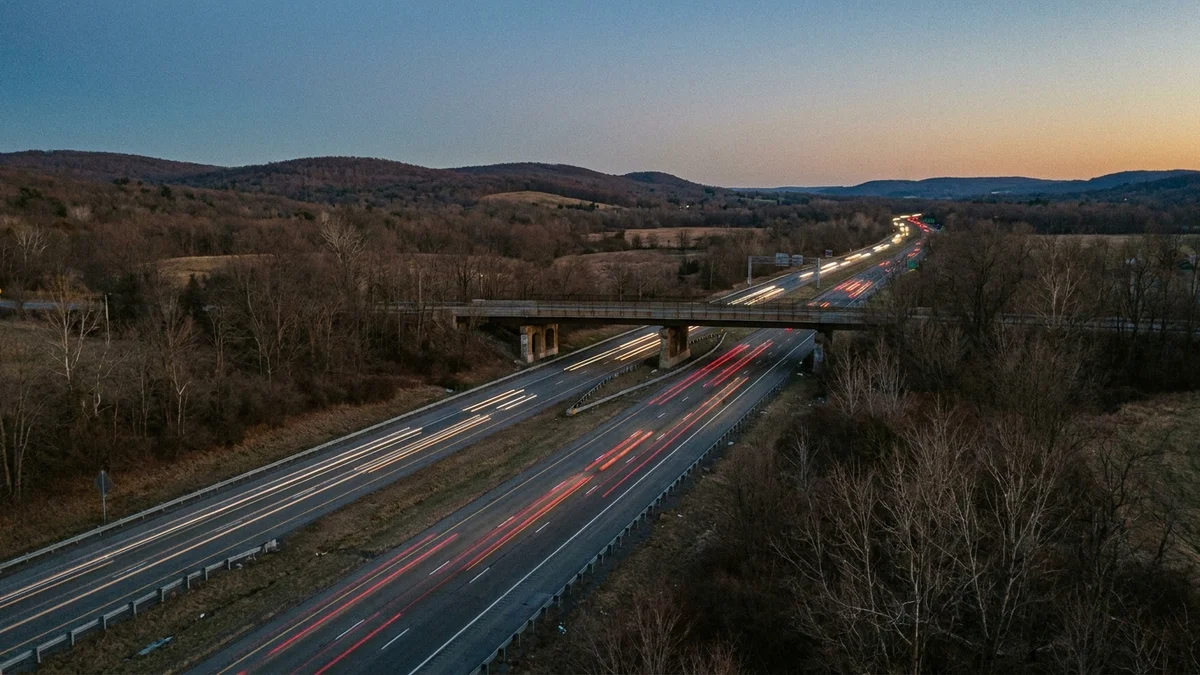

Belt Parkway recorded 1,348 crashes in 2023. That made it the single most crash-prone roadway in all of New York City. Of those, 614 produced injuries and eight were fatal crashes that killed 11 people. NYPD collision data shows the pattern has held across multiple years.
For a road that stretches just 15.4 miles along Brooklyn and Queens’ southern shoreline, the numbers are staggering. This aging highway, built in 1940 under Robert Moses, now carries far more traffic than it was designed to handle.
The 2023 Numbers
NYPD collision data for 2023 tells a clear story:
- 1,348 total crashes, the highest single-roadway count in NYC
- 614 injury crashes requiring medical attention
- 8 fatal crashes that killed 11 people
Contributing factors include speeding on long straight stretches, heavy commuter traffic, and hazardous interchanges with high-speed merges.
These numbers come from the NYPD crash dataset on NYC Open Data. The data covers all reported crashes on Belt Parkway: vehicle-only, pedestrian strikes near exit ramps, and multi-car pileups.
Why Belt Parkway Is So Dangerous
Several structural problems make Belt Parkway deadlier than comparable NYC highways.
- No shoulders on most sections. When a vehicle breaks down or a crash occurs, there’s nowhere to pull off. Disabled vehicles block travel lanes, creating secondary crash risks. Highways with full shoulders give drivers an escape route. Belt Parkway offers none.
- Outdated design. The parkway was built for 1940s traffic and 1940s cars. Modern SUVs and trucks take up more lane width, cutting clearance. The curves were built for 35 to 40 mph, not the 50 to 60 mph drivers reach today.
- Limited emergency access. First responders often can’t reach crash scenes fast because the road blocks access for emergency vehicles. Delays in response time make injuries worse.
- Flooding during storms. Low-lying sections near Coney Island Creek and Jamaica Bay flood during heavy rain and coastal storms. Standing water causes hydroplaning crashes. Those spike during nor’easters and heavy summer storms.
What Causes Belt Parkway Crashes
The NYPD data breaks down contributing factors for Belt Parkway collisions. The pattern mirrors citywide trends but with highway-specific wrinkles.
- Speeding is a major factor on Belt Parkway’s long straight stretches. Drivers accelerate through open sections and then hit sharp curves or sudden congestion near exits without enough time to react.
- Driver inattention and distraction accounts for a large share of reported crashes. On a highway with frequent stop-and-go conditions, a few seconds of distraction closes gaps fast.
- Following too closely compounds the problem. Belt Parkway’s narrow lanes leave minimal buffer between vehicles. The road’s curves reduce forward visibility. When the car ahead brakes, there’s less time and space to react.
- Lane marking and signage problems affect multiple sections. Worn lane markings become nearly invisible in rain. Exit signs appear late, forcing last-second lane changes that trigger sideswipe collisions.
The Human Cost
Highway crashes produce more severe injuries than local street collisions because of the higher speeds involved.
Common injuries from Belt Parkway crashes include whiplash and cervical spine injuries from rear-end collisions, broken bones and internal injuries from high-speed impacts, and traumatic brain injuries when vehicles strike median barriers or guardrails.
A road built in 1940 for lower speeds and fewer vehicles now handles traffic it wasn’t designed for. Small mistakes produce outsized consequences on a highway with no shoulders and no margin for error.
What You Should Know After a Belt Parkway Crash
If you’re involved in a collision on Belt Parkway, several factors affect your legal options.
- New York’s no-fault insurance covers your initial medical bills and lost wages up to $50,000 through Personal Injury Protection. To pursue a lawsuit for full compensation, including pain and suffering, you must meet the “serious injury” threshold under Insurance Law § 5102(d). That means showing a fracture, significant limitation of a body function, or disability lasting 90 or more days.
- Multiple parties may be liable. Beyond the other driver, Belt Parkway crashes may involve claims against the City of New York or State DOT for dangerous road conditions. Worn lane markings, inadequate signage, drainage failures, or guardrail defects can support government liability claims. File a Notice of Claim within 90 days of the accident.
- Evidence disappears fast. Highway crashes require immediate evidence preservation. Dashcam footage, surveillance from nearby businesses near exits, and the NYPD crash report all matter. Cell phone records can establish whether the other driver was distracted.
The Legal Timeline
New York’s statute of limitations gives you three years from the date of a car accident to file a personal injury lawsuit under CPLR § 214(5).
Against a government entity like the city or state, the clock is much shorter: 90 days for a Notice of Claim under General Municipal Law § 50-e, and one year and 90 days to file the lawsuit itself.
For serious injuries on Belt Parkway, the difference between a well-documented case and a weak one often comes down to what happens in the first weeks after the crash. The NYC DOT SIRTA reports document known road conditions on Belt Parkway and can support claims where infrastructure failures contributed.
Frequently Asked Questions
Who is responsible for Belt Parkway maintenance?
Belt Parkway falls under the jurisdiction of the NYC Department of Transportation. The state DOT also has oversight for certain sections. When poor road conditions contribute to a crash, such as potholes, flooding, or inadequate signage, the responsible government entity may share liability.
Can I sue after a Belt Parkway crash if I was partially at fault?
Often, yes. Under New York’s comparative negligence rule, your award is reduced by your percentage of fault. If you’re 20% at fault and your damages are $500,000, you’d recover $400,000.
One limit applies to lawsuits filed on or after May 26, 2026: CPLR 1411(b), added by Bill A10008 (Chapter 58 of 2026), bars recovery when your fault is greater than the combined fault of the drivers you sue.
How much is a Belt Parkway accident case worth?
It depends on the severity of your injuries, the strength of the evidence, and which parties are liable. Highway crashes at speed tend to produce more serious injuries than local street collisions. Cases involving spinal injuries, traumatic brain injuries, or multiple fractures commonly reach six and seven figures.