
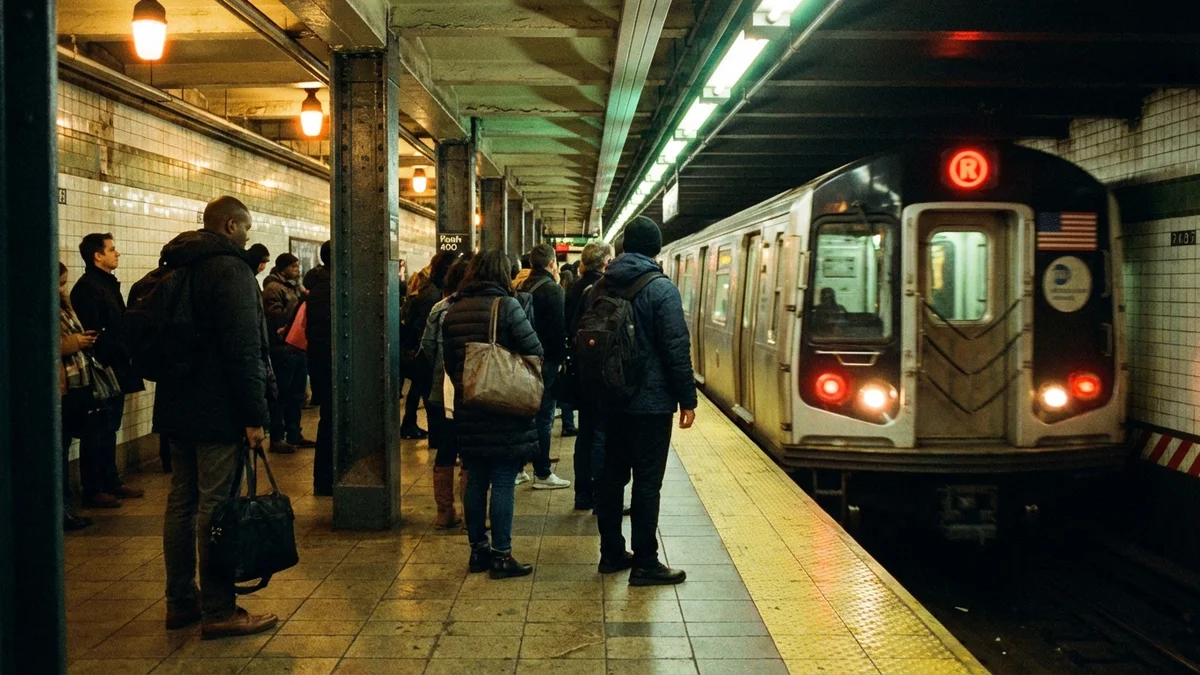
The New York City subway is the largest rapid transit system in the Western Hemisphere: 472 stations, 248 miles of routes, 6,787 subway cars, and 1.2 billion riders in 2024, recovering toward pre-pandemic levels.
That volume of people moving through aging underground infrastructure produces injuries. In 2023, two hundred and forty-one people were struck by subway trains. Ninety-seven were fatal. The MTA’s 2024 Annual Report on Litigation shows MTA New York City Transit carried 12,832 active personal injury claims and lawsuits as of December 31, 2024.
The system’s over 120 years old. Many stations haven’t been substantially renovated since they were built.
We went through the subway injury records, who is liable for them, and how to protect your claim.
How Subway Injuries Happen
Subway injuries fall into distinct categories, each with different liability theories and evidence requirements.
Platform Falls
The platform edge is the most dangerous location in the subway system. Injuries occur when passengers:
- Fall into the gap between the train and the platform. The gap varies by station and car type, from 2 inches to over 8 inches at curved platforms. Of 472 stations, 432 now have tactile edge warning strips. Hundreds of gap injuries still occur annually.
- Slip on wet platforms. Water intrusion is endemic in the subway system. Leaking ceilings, tracked-in rain, and condensation create slippery surfaces. The MTA has a duty to address known wet conditions, mop regularly, and post warning signs.
- Trip on uneven surfaces. Cracked tiles, raised expansion joints, and deteriorated platform edges create trip hazards. The age of the infrastructure means these conditions are widespread.
- Fall off the platform onto the tracks. A fall onto the tracks is life-threatening, whether from overcrowding, a medical episode, or being pushed. The electrified third rail carries 625 volts DC.
Platform screen doors are standard in many Asian and European metro systems. They barely exist in NYC. As of December 2025, 115 stations have low barrier fences, but these are not full platform doors.
A full platform screen door pilot is planned for three stations (Times Square, Third Avenue, Sutphin Boulevard) at over $100 million. No firm timeline.
For comparison, Seoul saw platform fatalities drop from 37.1 per year to 0.4 per year after installing screen doors. A 98.9% reduction. The Federal Transit Administration’s National Transit Database tracks comparable safety outcomes nationally.
Train Strikes
In 2023, 241 people were struck by subway trains. Ninety-seven of those incidents were fatal. That’s a 30% increase since 2018. Outcomes are almost always catastrophic: death, amputation, or severe traumatic brain injury.
A study of 838 subway strike incidents from 2008 to 2021 breaks down the circumstances:
| Circumstance | Percentage |
|---|---|
| Suicide | 48.8% |
| Accidental | 33.0% |
| Undetermined | 17.1% |
| Pushed (homicide) | 1.1% |
Eighty-four percent of incidents occur on platforms. Accidental falls, medical emergencies, intoxication, and overcrowding all contribute.
When a fall from the platform results in a train strike, the legal question turns on MTA safety measures. Were there platform edge barriers, sufficient lighting, warning markers? Did the train operator have time to stop?
Stairway Falls
Slips, trips, and falls account for 75% of all subway customer accidents. NYC subway stations have thousands of stairways. Many are steep, narrow, and over a century old. Falls on subway stairs produce serious injuries: broken bones, head injuries, spinal injuries.
Common causes:
- Worn or broken treads. Metal nosing strips wear smooth over decades of foot traffic, losing their slip resistance.
- Broken or missing handrails. Particularly dangerous for elderly passengers and those carrying bags or strollers.
- Overcrowding. Rush-hour crowding on narrow stairways creates pushing, jostling, and loss of balance.
- Water and debris. Rain, snow, and tracked-in liquids make stairs slippery. Trash and food waste add to the hazard.
Escalator and Elevator Injuries
The MTA operates 284 escalators and approximately 300 elevators across the subway system. Both have documented maintenance problems.
Escalator injuries include sudden stops that throw riders forward, entrapment of shoes or clothing, handrail failures, and collapses of escalator treads. The MTA’s escalator availability rate draws ongoing criticism. Many escalators sit out of service for extended periods.
Elevator injuries include entrapment, door strike injuries, sudden drops, and injuries from stepping into elevator shafts when doors open without a car present. A rare but documented occurrence in aging equipment.
Door Strike Injuries
Subway car doors close with significant force. The doors are designed to detect obstructions, but detection systems don’t always work. Passengers caught in closing doors can suffer hand, arm, and shoulder injuries. When a closing door catches a bag or clothing and the passenger falls, injuries get worse.
The MTA’s “stand clear of the closing doors” announcement is a well-known part of NYC life. But the legal duty to operate doors safely goes beyond announcements. The door closing mechanism must function properly. The train operator must verify the platform is clear before commanding the doors to close.
Filing a Claim Against the MTA
The MTA is a public benefit corporation. Claims against it follow the same rules as claims against other government entities in New York.
What the Notice Must Include
The Notice of Claim must include your name and address, the nature of the claim, the date, time, and location of the injury, a description of how the injury occurred, and the damages claimed. The Notice is served on the MTA’s legal department.
Late filings are rarely granted: you must show the delay was excusable, the MTA had actual knowledge of the claim, and the delay does not substantially prejudice the MTA’s defense.
MTA Claims Data
The MTA’s annual litigation reporting tracks the injury claims filed against it. As of December 31, 2024, MTA New York City Transit carried 12,832 active personal injury claims and lawsuits. Transit injury cases consistently rank among the highest-volume categories of public-authority litigation in the state.
Defense is relentless. The MTA’s legal department has dedicated staff handling transit injury litigation. Surveillance cameras in stations and on trains are standard, and the MTA routinely uses video evidence to challenge claims.
That cuts both ways. The same cameras the MTA uses for defense can also capture evidence of the dangerous condition that caused the injury.
Notable Subway Injury Verdicts
New York juries have returned substantial verdicts in subway injury cases:
These verdicts reflect both the severity of subway injuries and New York’s lack of a damages cap.
Subway Crime and Assault Injuries
According to NYPD Transit Bureau crime statistics, subway felony assaults rose 53% from 2019 to 2024, climbing from 374 to 573 incidents.
The crime rate stands at 1.65 major crimes per million riders. Half of all violent subway crimes concentrate in just 30 stations. NYPD Transit Bureau staffing has increased in response. Through 2025, numbers are trending down 16% from 2024.
Assaults on subway platforms and in train cars produce personal injury claims. The legal theory depends on the circumstances:
- Claim against the assailant. Criminal prosecution and a civil lawsuit for damages.
- Claim against the MTA for inadequate security. If the station had a known history of assaults and the MTA failed to provide adequate lighting, surveillance, or police presence, the MTA may share liability.
- Claim against the city. If NYPD Transit Bureau staffing was inadequate at a station with documented safety problems.
The threshold for proving inadequate security is high. The MTA isn’t an insurer of passenger safety. But when a pattern of criminal activity at a specific station is documented and the MTA fails to respond, liability can attach.
What to Do After a Subway Injury
- Report the injury immediately. Tell the station agent or train crew. Request that they document the incident. Get a report number.
- Call 911 if needed. The FDNY and EMS respond to subway emergencies. Medical documentation from the scene is critical.
- Photograph everything. The condition of the platform, stairs, escalator, or train car. The specific defect or hazard. Your injuries. The station name and specific location within the station.
- Get witness information. Other passengers who saw what happened. In the subway, people disperse quickly. Get names and phone numbers before they leave.
- File a Notice of Claim within 90 days. This is the most critical deadline. The 90-day clock is not suspended while you “see how the injury develops.” The 90-day clock runs regardless of injury severity.
- Preserve your MetroCard or OMNY data. Your fare payment records can establish that you were a paying passenger at the specific station and time.
The MTA’s surveillance cameras record continuously. Video evidence is typically preserved for 30 to 90 days depending on the station. Your attorney should send a preservation letter to the MTA immediately to prevent the footage from being overwritten.
Only 159 of 472 subway stations (34%) are ADA accessible. The MTA committed to reaching 95% accessibility by 2055 under a 2022 settlement. The lack of elevators forces riders with disabilities into riskier situations. Steep stairs. Platform gaps. Overcrowded stations without adequate infrastructure.
We’ve handled transit injury cases across the NYC subway system for over 37 years. We know how to navigate MTA claims, preserve video evidence, and build cases against the agency that runs the largest subway system in the Western Hemisphere.
Call 212-221-5999 or request a free case review.