
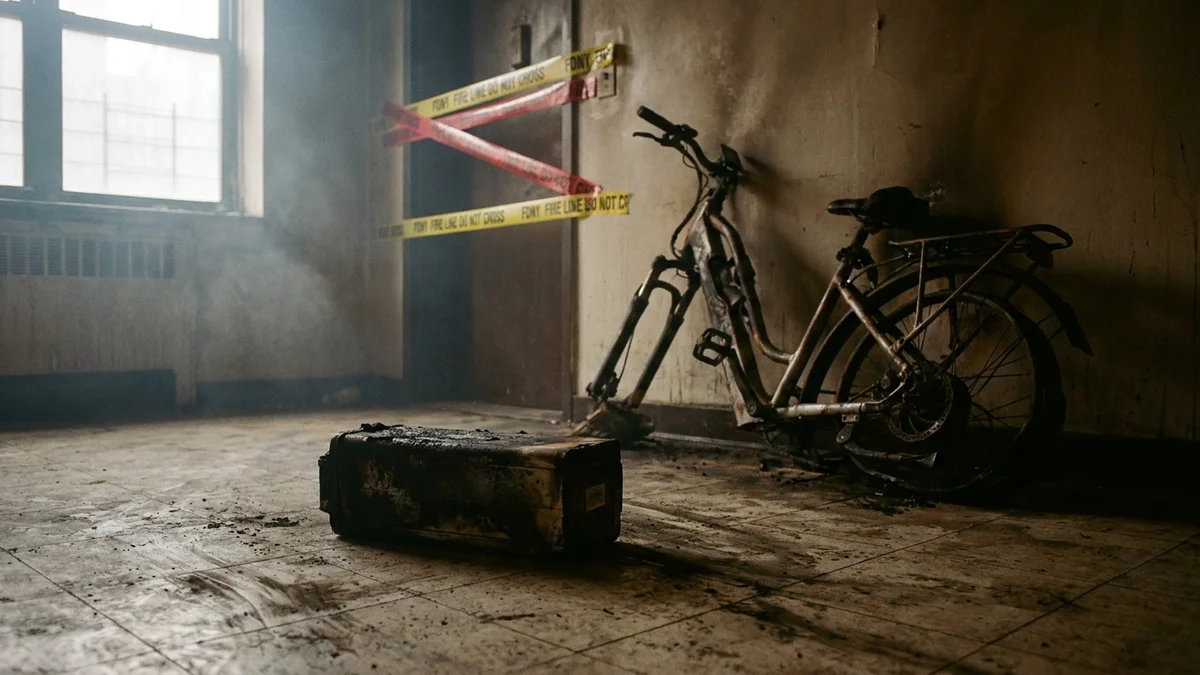
The numbers are blunt.
More than 800 fires sparked by lithium-ion batteries in New York City since 2022. 30 deaths. More than 400 injuries. That’s the cumulative total the NFPA Journal published in August 2025, citing FDNY data.
The fatal trajectory finally bent in 2024. Deaths fell from 18 in 2023 to 6 in 2024, a 67% year-over-year decline that FDNY Commissioner Robert Tucker attributed to a $1 million advertising campaign and steady safety messaging that pushed New Yorkers toward safer charging behavior.
The fires haven’t stopped. The legal exposure hasn’t either.
What the Data Shows
| Period | Fires | Deaths | Injuries |
|---|---|---|---|
| Cumulative since 2022 | 800+ | 30 | 400+ |
| 2023 | (component of total) | 18 | ~150 |
| 2024 | (component of total) | 6 | 50+ in H1 alone |
The 800-figure comes from the NFPA Journal’s August 2025 reporting on the FDNY response. The 18-deaths-to-6-deaths drop was the FDNY’s headline at a March 2025 City Council hearing on fire and emergency management.
The injury count understates the harm. Burn injuries that don’t kill still produce months of hospitalization, skin grafts, smoke inhalation damage, and displacement from uninhabitable apartments.
The Brooklyn Midwood fire on Avenue M between East Fourth and Fifth Streets in June 2024 injured four people. One of them, hospitalized for about six weeks, died from his injuries in August 2024.
The Incidents That Defined the Year
Three 2024 fires illustrate the pattern.
Harlem, February 2024
Fazil Khan, 27, died when a lithium-ion battery sparked a fire in an apartment building.
Brooklyn (Midwood), June 2024
A lithium-ion battery fire in a Midwood building injured four. One of the injured died about six weeks later from injuries sustained that night.
Bronx, 2024
A five-alarm multi-family home fire injured 13 first responders, 9 firefighters and 4 EMS workers, plus 2 residents including a child. One firefighter was critically injured but survived. FDNY traced the cause to lithium-ion batteries.
Mayor Adams said it plainly during the response coverage: “We continue to see over and over again the role that lithium-iron batteries are showing. This is why we are looking at every measure possible to remove these batteries off our street.”
The “every measure possible” path runs through enforcement, litigation, and the building code.
The Legal Framework
NYC enacted Local Law 39 of 2023, effective September 16, 2023, to ban the sale, lease, and rental of e-bikes, e-scooters, and lithium-ion batteries in NYC unless they’re certified to UL safety standards (UL 2849 for e-bikes, UL 2272 for e-scooters, UL 2271 for batteries). It’s a sales and certification law, not a storage law.
The New York State Fire Code incorporates National Fire Protection Association standards for lithium-ion safety. The NYC Housing Maintenance Code applies to residential buildings, including NYCHA properties.
For injured tenants and bystanders, four legal theories carry most of the weight under New York law:
Product liability
When a defectively designed battery, manufacturing defect, or failure to warn causes a fire, the manufacturer and any retailer in the chain of distribution can face strict liability. Counterfeit batteries, batteries from non-certified retailers, and aftermarket replacement packs are common targets.
Negligence
Anyone who stored, maintained, or charged the battery in a way that fell below the standard of care can be liable. That includes building owners, managing agents, and tenants themselves.
Premises liability
Landlords have a duty to maintain safe conditions. If a building owner knew or should have known about unsafe battery storage in a common area or hallway and didn’t act, the duty was breached.
Strict liability for defective products
A separate doctrine that doesn’t require proof of negligence, only that the product was unreasonably dangerous and caused the injury.
What Victims Can Recover
Under New York law, victims can recover three categories of damages.
Economic damages
Medical expenses, including emergency treatment, hospitalization, surgical care, and ongoing rehabilitation. Lost wages and lost earning capacity for victims who can’t return to their jobs at the same level. Property damage, which in apartment fires often runs into the tens of thousands once you add personal belongings, displacement housing costs, and replacement of essentials.
Non-economic damages
Pain and suffering. Emotional distress. Permanent disfigurement or disability. Burn injuries leave both physical and psychological scars, and New York juries have recognized that.
Punitive damages
Available in cases involving gross negligence or willful misconduct. A retailer who knowingly sold uncertified batteries, or a manufacturer who hid a known defect, can face this exposure.
The insurance map runs across multiple policies. Renters or homeowners insurance for personal liability and property loss. Commercial general liability for retailers and manufacturers. Workers’ compensation for the firefighters and EMS workers hurt fighting these fires.
What’s Still Unknown
The public reporting we’ve reviewed doesn’t break out e-bike and scooter battery fires separately from other lithium-ion sources like power tools and consumer electronics. The 2025-2026 fatality count isn’t yet published in the NFPA Journal or FDNY year-end reports we surveyed.
We also don’t have public data on Local Law 39 enforcement actions, lawsuits filed against retailers and manufacturers tied to NYC fires, or settlement amounts in resolved cases.
Those gaps matter for tenants, building owners, and victims trying to assess risk. They also matter for litigation strategy, where the discovery process can produce data that the public reporting has not.
If You’ve Been Injured
Three steps protect a claim under New York law.
Get medical treatment first. Document the injuries, the chain of care, and the physician findings.
Preserve the evidence. The battery itself, the device, the charger, the packaging, and any sales receipts or online order records. In product liability cases, the physical evidence is often the case.
Know the deadlines. New York’s statute of limitations on personal injury claims is generally three years from the date of injury under CPLR § 214(5). Wrongful death claims have a two-year window under EPTL § 5-4.1.
Notice-of-claim rules under General Municipal Law § 50-e apply if a public housing authority or other government entity is potentially liable, and those windows are short.
The path from a battery fire to a recovery runs through facts: where the battery came from, how it was stored, what warnings were on it, and who in the chain of responsibility had a duty to act.
Lithium-ion fires are still relatively new as a litigation category in New York, and the case law is being written now.