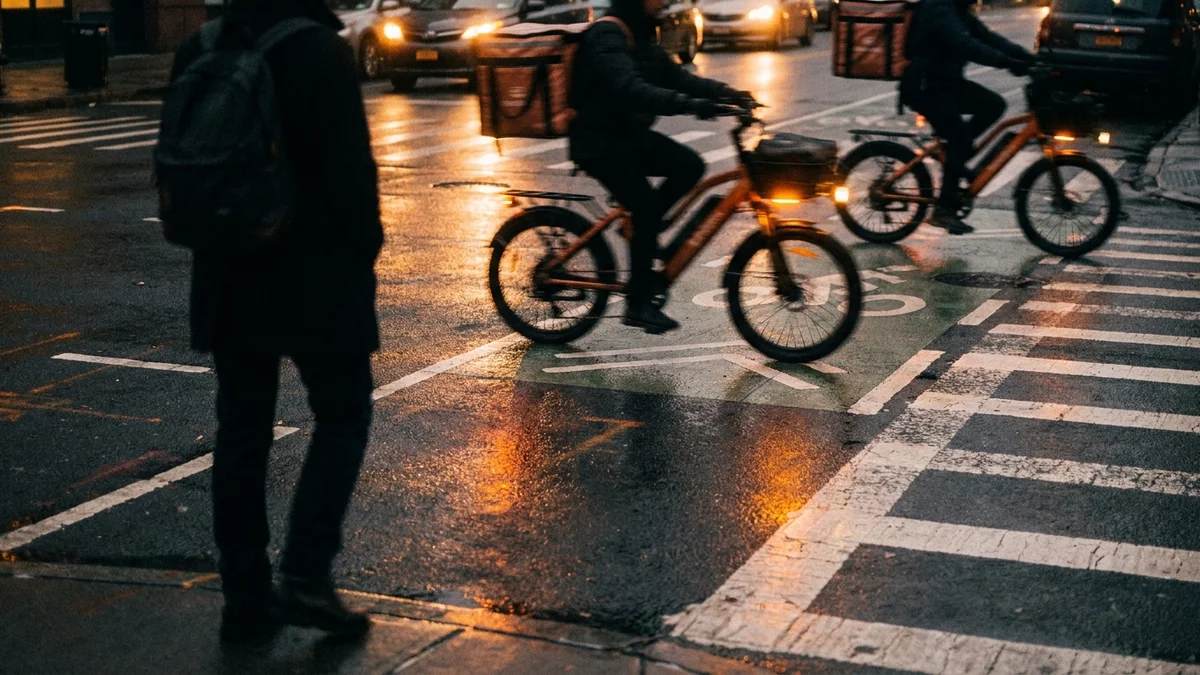
On September 5, 2023, Priscilla Loke was standing just off the curb at Grand and Chrystie streets in Chinatown when an electric Citi Bike struck her. She was 69 years old. She died two days later at Bellevue.
Police identified the rider, who got a summons for running the red light. For her family, a single red-light ticket did not answer for her death.
Two and a half years later, her name is on a bill in Albany. Priscilla’s Law (S2599A in the Senate, A339A in the Assembly) would require every e-bike and e-scooter operated in a city of one million or more to carry a license plate and a DMV registration.
Loke’s rider was caught. Many are not. The question the bill tries to answer is a specific one: when an unplated e-bike hits a pedestrian and rides off, how does the injured person find out who hit them?
The Crash Data
E-bikes were not a significant presence on NYC streets a decade ago. They are now. Delivery platforms, bike-share programs, and private ownership have produced an e-bike fleet in the tens of thousands.
| Metric | Data | Source |
|---|---|---|
| Pedestrian injuries from e-bikes/e-scooters, 2022 | 329 | NYC Comptroller |
| Pedestrian injuries from e-bikes/e-scooters, 2023 | 328 | NYC Comptroller |
| E-bike rider deaths in NYC, 2020 to 2023 | 11 to 23 | NYC Comptroller |
| E-bike collision increase, H1 2024 vs H1 2025 | +11% (290 to 323) | NYPD data |
| Moped deaths, July 2024 vs July 2025 | 2 to 4 | NYPD data |
| Motorized two-wheeler deaths, Jan-Sept 2025 | 51 | NYPD data |
The pattern is consistent: fatalities among e-bike riders themselves have declined slightly (from 9 in 2024 to 6 in the first half of 2025), while injuries to pedestrians and other road users struck by e-bikes have risen.
This is the gap Priscilla’s Law targets. The riders who are the danger are not the same people as the riders who are getting killed. The regulatory framework has not caught up to that distinction.
What the Bill Does
The Senate and Assembly versions of Priscilla’s Law are substantively similar.
Registration
Every electric-assist bicycle and every electric scooter operated in a city with a population of one million or more (in practice, NYC) must be registered with the New York State Department of Motor Vehicles. Registration creates a legal record tying a specific vehicle to a specific owner.
License Plates
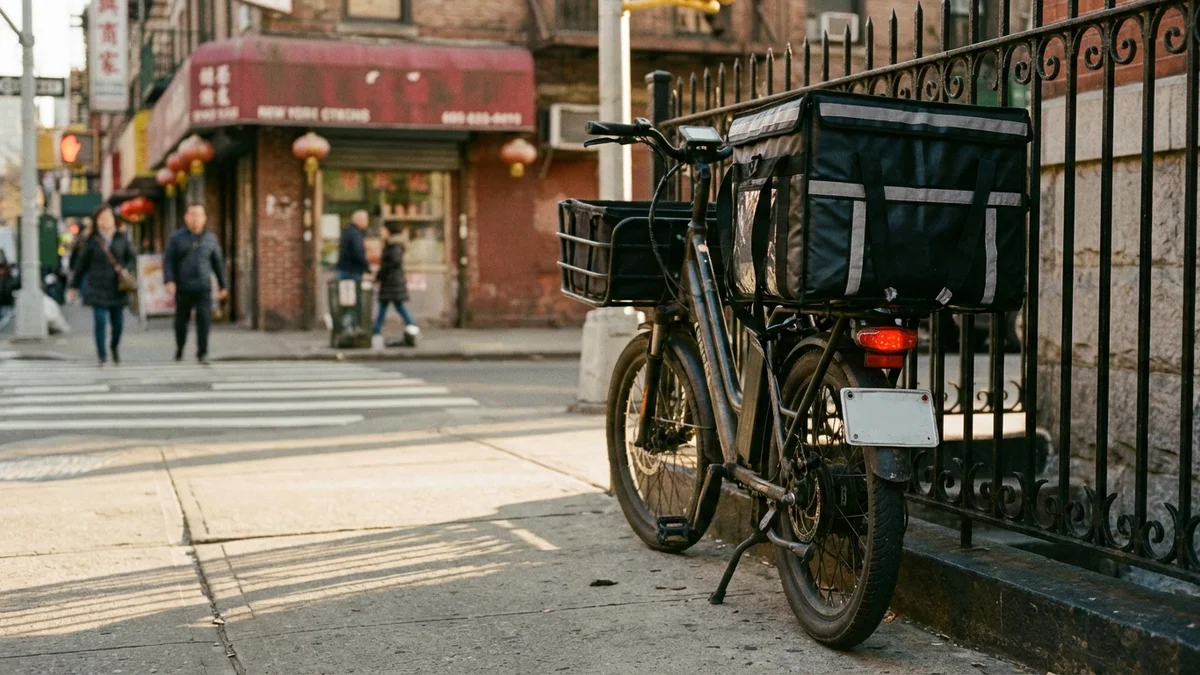
Each registered e-bike and e-scooter must display a plate visible from the rear. The plate lets police, witnesses, and surveillance cameras identify a rider involved in a crash or a traffic violation.
Enforcement Authority
Law enforcement is empowered to issue fines for unregistered or unplated e-bikes and to impound non-compliant vehicles.
What the Bill Leaves Out
S2599A and A339A stop at registration and plates. Neither bill mandates liability insurance. Insurance is the provision that draws the most pushback in the broader policy debate, because delivery workers’ advocacy groups argue insurance costs would fall hardest on low-income riders, but the current text of Priscilla’s Law does not impose it.
The NYC Council version, Intro 606, is narrower still. It focuses on plates and registration administered at the city level.
What Is Already in Effect
Priscilla’s Law is not the first e-bike regulation New York has enacted. It is the most comprehensive.
The Delivery App Problem
A large share of NYC e-bike traffic is commercial. DoorDash, Uber Eats, Grubhub, Relay, and other platforms employ, contract, or otherwise rely on tens of thousands of delivery workers who use e-bikes to meet delivery windows.
NYC passed a minimum pay standard for delivery workers in 2023 that effectively raised their hourly rate. That change, combined with the timing pressures built into platform algorithms, created financial incentives to ride fast and take risks. Studies of delivery app work have documented speed as a driver of income.
The liability question when a delivery worker strikes a pedestrian depends on how the platform has classified the worker. DoorDash, Uber Eats, and Grubhub treat their delivery workers as independent contractors, which limits the platform’s direct liability in most cases. Relay uses a W-2 employment model, which opens up respondeat superior claims against the company.
Priscilla’s Law does not change the underlying employment classification. But by requiring plates and registration, it makes the identification step easier, which is the first obstacle in any pedestrian injury case involving a delivery e-bike.
The Liability Gap
The current NYC situation creates a three-way gap for injured pedestrians.
First: Identification
Without plates, a fleeing rider cannot be traced from surveillance footage alone. A partial vehicle description (red e-bike, male rider, dark jacket) rarely produces a suspect.
Second: Insurance
Private auto insurance does not automatically cover e-bike liability. Homeowners and renters policies sometimes do, sometimes with exclusions. Commercial e-bikes operated for delivery typically require separate commercial policies that many individual owners do not carry.
Third: Collectability
Even when an e-bike rider is identified, personal assets may not cover the damages in a serious injury case. Medical bills for a pedestrian with a traumatic brain injury or a fractured spine can exceed $500,000 in the first year alone. A rider working for $18 an hour is not a practical source of recovery.
Each of these gaps reduces the likelihood that an injured pedestrian actually recovers compensation, even when the liability story is clear.
What Priscilla’s Law Does Not Solve
The bill addresses identification. It does not address the underlying crash rate.
Protected bike lanes, sidewalk enforcement, e-bike speed limiters, and battery safety regulation (a separate issue, given the lithium-ion battery fires that have killed dozens of New Yorkers) all matter for actual street safety.
The NYC Comptroller’s 2024 report, “Street Safety in the Era of Micromobility,” lays out a multi-layered policy framework that includes education, infrastructure, enforcement, and regulation of the platforms that contract with delivery riders.
Registration alone will not reduce collisions. What it does is create the legal infrastructure to hold riders accountable after a collision occurs. The NYC Comptroller’s 2024 micromobility report lays out a multi-layered policy framework that includes education, infrastructure, enforcement, and regulation of platforms that contract with delivery riders.
Where the Bill Stands
As of April 2026, S2599A and A339A are in committee. Assembly Member Jenifer Rajkumar is the lead sponsor in the Assembly. Senator Joseph Addabbo Jr. carries the Senate version, with Senator Brad Hoylman-Sigal as co-sponsor.
At the city level, Council Member Bob Holden’s Intro 606 has been the subject of committee hearings but has not advanced to a floor vote.
The political coalition around the bill is unusual. Pedestrian safety advocates, elderly voters, and some business groups support it. Delivery workers’ advocacy organizations (particularly Los Deliveristas Unidos) resist any move to add insurance or registration costs, arguing they would fall hardest on low-income riders.
Transportation Alternatives has taken a mixed position, supporting identification requirements while raising concerns about enforcement impacts on lower-income riders.
What happens next depends on whether the bill sponsors can hold the registration-and-plate framework without layering on costs that workers cannot absorb.
What This Means If You’re Hit by an E-Bike
The legal path forward when an e-bike strikes a pedestrian in NYC depends on what information is available at the scene.
If the rider stops and provides ID. The standard personal injury case proceeds. Claims can be pursued against the rider directly, against any delivery platform that employed the rider, and against any available insurance policy.
If the rider is working for a delivery app. The platform’s insurance coverage (where it exists) can be a source of recovery. Documentation of the delivery app account, the order the rider was fulfilling, and the rider’s employment classification becomes central to the case.
If the rider flees unidentified. The options narrow substantially. Surveillance footage from nearby businesses, witness statements, and, in rare cases, NYPD investigation can produce an ID. Medical bills and some lost wages are still covered through no-fault insurance if the pedestrian has auto coverage in the household. Pain and suffering recovery requires an identifiable defendant.
Priscilla’s Law, if enacted, would make the fled-rider scenario rarer. That is the point.