Personal Injury Trial Lawyers
Manhattan Slip and Fall Lawyers
From office lobbies to subway stairs, NYCHA stairwells to hotel ballrooms. New York County Supreme Court (1st Dept appellate venue). We move fast before security video overwrites.
Manhattan premises liability, in plain terms
Manhattan falls happen in predictable places. Office building lobbies in Midtown and the Financial District. Subway station stairs and platforms across the borough's 100+ stations. NYCHA stairwells in Harlem, the Lower East Side, and Chinatown. Restaurant entryways from the West Village to East Harlem.
Hotel lobbies and ballrooms throughout Midtown. Construction-zone temporary walkways across Manhattan's continuous development. Sidewalk falls outside Penn Station, Grand Central, Madison Square Garden, and the Times Square plazas.
A slip and fall is a case about what the property owner knew, when they knew it, and what they did about it. New York law requires proof of a dangerous condition, proof of actual or constructive notice, and proof that the condition caused the injury.
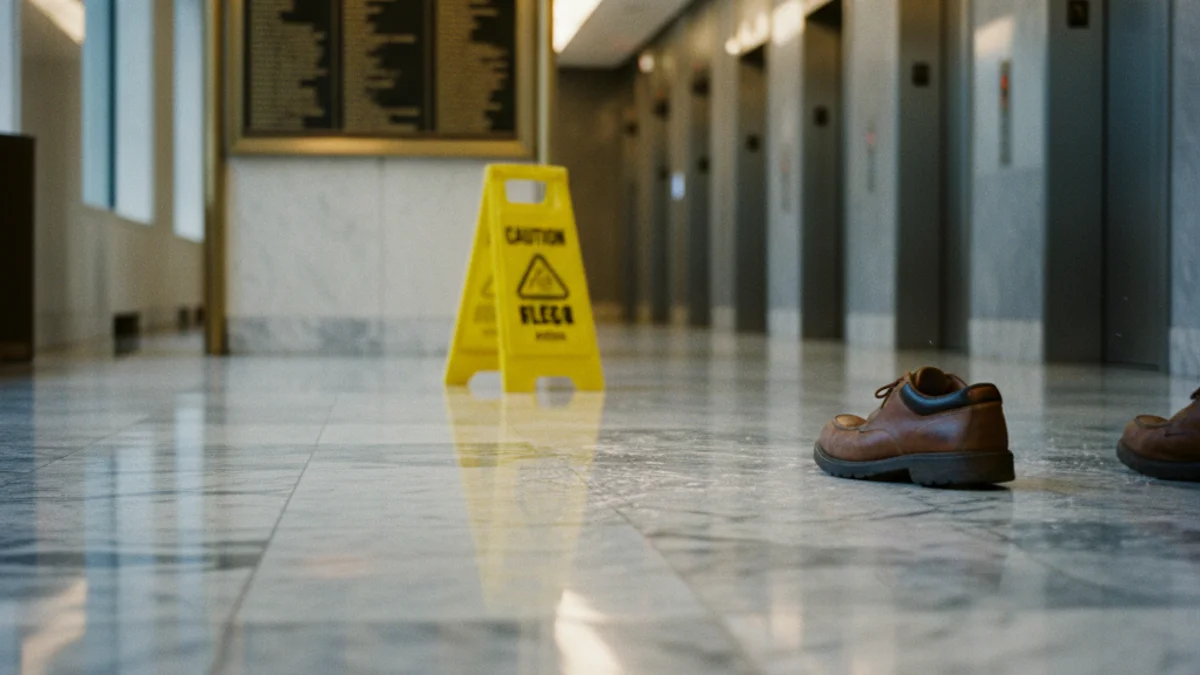
Each element has its own evidence. Security footage routinely overwrites in 7 to 30 days. Witnesses leave town. Wet floor signs get reset. The first two weeks after a fall often determine whether the case is viable.
The three elements you must prove
- A dangerous condition existed. Wet floor, ice patch, broken step, uneven threshold, loose carpet, missing handrail, inadequate lighting, accumulated debris.
- The owner had actual or constructive notice. Actual notice means the owner knew. Constructive notice means the condition existed long enough that a reasonable owner would have discovered and fixed it.
- Causation. The condition caused the fall. The fall caused the injury.
Who is liable on a Manhattan sidewalk
NYC Administrative Code 7-210 shifted sidewalk-maintenance liability to abutting property owners for most commercial and multi-family residential parcels. The city retained responsibility for sidewalks abutting owner-occupied one-, two-, and three-family residential homes. In Manhattan, virtually every property is commercial or multi-family, meaning the abutting building owner is typically liable.
Public sidewalks around NYCHA, Parks Department property (Central Park, Bryant Park, Battery Park, the Highline), MTA stations, and the Port Authority Bus Terminal are government claims subject to 90-day notice.
Manhattan-specific premises hot spots
- Subway stations. Stairs and platforms across 100+ Manhattan stations. MTA defendant; 90-day notice required.
- NYCHA developments. Wagner Houses, Robert F. Wagner Houses, Drew-Hamilton, Lower East Side and Chinatown developments. Stairwell, lighting, and common-area claims.
- Office building lobbies. Midtown and Financial District. Wet marble, broken tile, cleaning-cart hazards.
- Hotel lobbies and ballrooms. Midtown hotels host weddings, conferences, charity events: spilled drinks, slick floors, low thresholds.
- Restaurant entryways. Greasy floors, weather-related slips, broken tile.
- Construction site temporary walkways. Plywood ramps, missing handrails, inadequate lighting.
- Penn Station, Grand Central, Port Authority Bus Terminal. High-volume public transit hubs with their own notice rules.
- Times Square pedestrian plazas. NYC DOT defendant; prior written notice rules apply.
Key New York laws
- CPLR 214(5). Three-year personal-injury SOL.
- GML 50-e. 90-day Notice of Claim for NYC, NYCHA, MTA, NYC Health + Hospitals.
- GML 50-i / CPLR 217-a. 1 year and 90 days to sue a municipality.
- NYC Administrative Code 7-210. Abutting property owner liability for sidewalks.
- NYC Administrative Code 7-201. Prior written notice for sidewalk/roadway defects against the city.
- Port Authority enabling legislation. 1-year written notice for Port Authority claims.
- CPLR 1411. Pure comparative negligence.
- Public Health Law 2801-d. Private right of action for nursing-home and residential health care facility negligence.
Where Manhattan slip and fall cases are filed
New York County Supreme Court at 60 Centre Street has unlimited civil jurisdiction. Appeals go to the Appellate Division, First Department (Manhattan and Bronx). The First Department's precedent on storm-in-progress, constructive notice, and the open-and-obvious doctrine shapes Manhattan strategy.
What to do immediately after a Manhattan fall
- Get medical care. Bellevue (NYC H+H), Mount Sinai, NYU Langone, NewYork-Presbyterian, Lenox Hill, Mount Sinai Beth Israel, Harlem Hospital (NYC H+H), Metropolitan (NYC H+H).
- Report the fall to the property owner or manager. Get an incident report with a copy for you.
- Photograph the dangerous condition before it is fixed.
- Get names and contact information for every witness.
- Save the clothing and shoes you were wearing.
- Do not give a recorded statement to the property's insurer.
- Send a preservation letter for video footage within days.
Related analysis from our team
- NYC Sidewalk Injury Laws
- Slip and Fall Liability for NYC Businesses
- Manhattan Personal Injury Lawyers
- NYC Slip and Fall Lawyers
New York City Comptroller. Annual Claims Report.
https://comptroller.nyc.gov/reports/annual-claims-report/New York State Department of Health. Falls mortality and hospitalization data.
https://www.health.ny.gov/NYC Administrative Code §§ 7-201, 7-210.
https://codelibrary.amlegal.com/codes/newyorkcity/latest/NYCadmin/0-0-0-1New York Civil Practice Law and Rules §§ 214, 217-a, 1411.
https://www.nysenate.gov/legislation/laws/CVPNew York General Municipal Law §§ 50-e, 50-i.
https://www.nysenate.gov/legislation/laws/GMU/50-ENew York Public Health Law § 2801-d.
https://www.nysenate.gov/legislation/laws/PBH/2801-DInjured in NYC? Talk to a Trial Lawyer.
Free consultation. No fee unless we win.
Frequently Asked Questions
What do I have to prove in a Manhattan slip and fall case?
Three elements: (1) a dangerous condition existed on the property, (2) the owner had actual or constructive notice of the condition, and (3) the condition caused your injury. Constructive notice means the condition existed long enough that a reasonable owner exercising reasonable care would have discovered and fixed it. Photographs, time-stamped video, prior-complaint records, and witness statements are the evidence that wins these cases.
Where are Manhattan slip and fall cases filed?
New York County Supreme Court at 60 Centre Street handles civil cases with unlimited jurisdiction, the correct venue for any serious injury claim. New York County Civil Court at 111 Centre Street handles claims up to $50,000. Appeals go to the Appellate Division, First Department (Manhattan and Bronx). For claims against NYC (Parks, Sanitation, Housing, Department of Transportation), NYCHA, MTA, Port Authority, or NYC Health + Hospitals, a Notice of Claim must be served on the NYC Comptroller within 90 days under General Municipal Law 50-e.
Who is liable when I fall on a Manhattan sidewalk?
Under NYC Administrative Code 7-210, the owner of property abutting a sidewalk is generally liable for sidewalk-maintenance injuries. There is an exception for owner-occupied one-, two-, and three-family residential properties, where the city retains responsibility. In Manhattan, almost every property is commercial or multi-family, meaning the abutting building owner is typically liable. For public sidewalks around NYCHA developments, Parks Department property (Central Park, Bryant Park, Battery Park, etc.), MTA stations, and the Port Authority Bus Terminal, the relevant government entity is liable.
What is the statute of limitations for a Manhattan slip and fall?
Three years from the date of the fall for personal injury under CPLR 214(5). If the property is owned or maintained by NYC, NYCHA, MTA, NYC Health + Hospitals, or another public entity, a Notice of Claim must be served within 90 days under GML 50-e, and the lawsuit must commence within 1 year and 90 days. Port Authority claims (Port Authority Bus Terminal, PATH stations) require 1-year written notice.
What is the 'storm in progress' defense and how do we beat it?
New York courts recognize that a property owner does not owe a duty to clear snow and ice while a storm is actively underway. The defense tries to extend the storm window to cover every winter fall. We defeat it with certified National Weather Service data showing precipitation ended hours before the fall, testimony from the injured person and witnesses about conditions at the time, and evidence of prior complaints or inadequate shoveling. For commercial properties, the rule applies but courts require a reasonable time after the storm ends, not an indefinite grace period.
What kinds of Manhattan falls do you see most?
Office building lobbies (wet floors, broken tile, marble slips). Subway station stairs and platforms (the largest single source of MTA premises claims). NYCHA stairwells in Harlem, the Lower East Side, and Chinatown developments. Restaurant entryways and floors throughout Midtown, the Village, and Lower Manhattan. Hotel lobbies and ballrooms. Construction-zone temporary walkway falls. Sidewalk falls outside Madison Square Garden, Penn Station, Grand Central, and Times Square pedestrian plazas.
What settlements do Manhattan slip and fall cases produce?
Average NYC slip and fall settlements range from $15,000 to $45,000 per case, with a 2023 average of approximately $23,000 per NYC Comptroller data. Manhattan cases involving fractures, surgery, permanent impairment, or catastrophic injury produce six- and seven-figure outcomes. Manhattan venue (1st Department) tends to favor strong notice cases. Value turns on injury severity, the strength of notice evidence (video is gold), defendant's insurance, and venue.
What should I do immediately after a Manhattan fall?
Get medical care. Bellevue, Mount Sinai, NYU Langone, NewYork-Presbyterian, Lenox Hill, Mount Sinai Beth Israel, Harlem Hospital, and Metropolitan document the injury contemporaneously. Report the fall to the property owner or manager and get an incident report with a copy for you. Photograph the dangerous condition before it is fixed. Get witness contact information. Save the clothing and shoes you were wearing. Do not give a recorded statement to the property's insurer. Send a preservation letter for video footage within days. Security video overwrites in 7 to 30 days.