
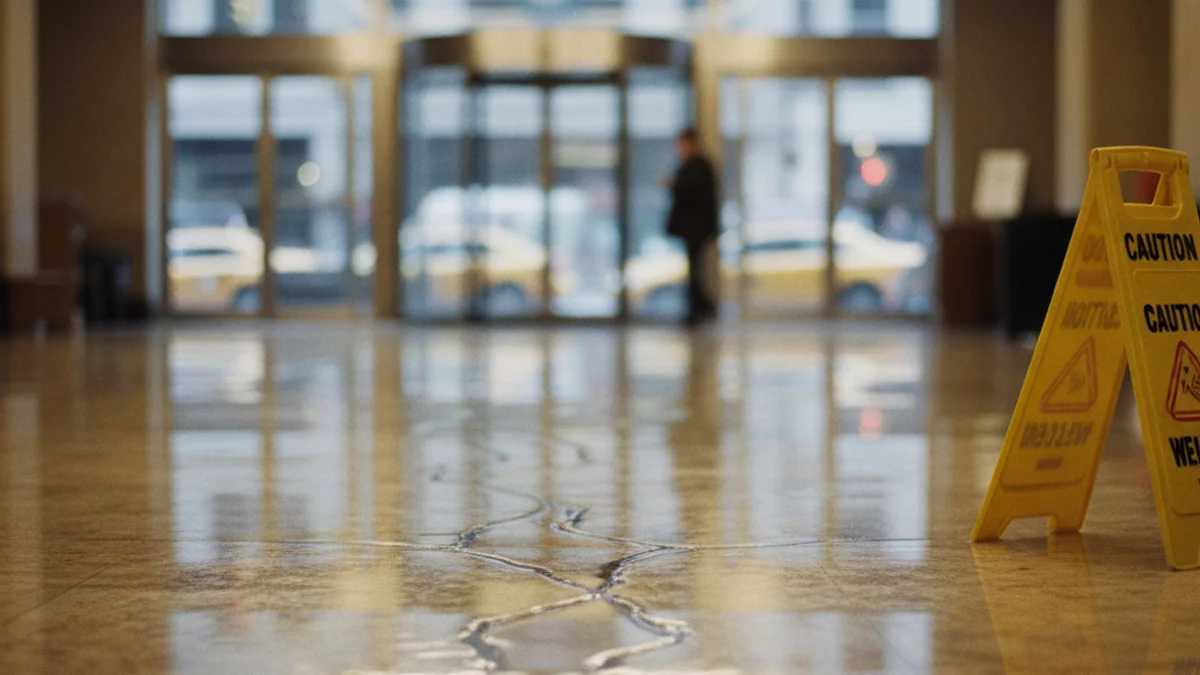
Slip and fall accidents are among the most common causes of injury in New York City. Every day, people are seriously hurt in grocery stores, restaurants, office buildings, and on sidewalks. But proving that a property owner is legally responsible for your injuries isn’t always straightforward.
Here’s what you need to know about premises liability in New York and when businesses can be held accountable for slip and fall injuries.
The Legal Standard: Negligence
New York premises liability law requires property owners to maintain their properties in a reasonably safe condition. To hold a business liable for a slip and fall, you must prove:
- A dangerous condition existed on the property
- The owner knew or should have known about the condition
- The owner failed to correct it or warn visitors
- That failure caused your injury
The “knew or should have known” element is often the most contested part of these cases.
Actual vs. Constructive Notice
A property owner can have knowledge of a hazard in two ways:
Actual notice means the owner or employees directly knew about the dangerous condition. For example, if a customer reported a spill to an employee before you fell, that’s actual notice.
Constructive notice means the condition existed long enough that the owner should have discovered it through reasonable inspection. A puddle that formed five minutes ago might not establish constructive notice; one that’s been there for an hour probably does.
Evidence that can establish constructive notice includes:
- Dirty or dried spills indicating they’d been present for a while
- Witness testimony about how long the hazard existed
- Store inspection logs showing inadequate monitoring
- Video surveillance footage
Common Slip and Fall Hazards in NYC
The dangerous conditions that cause slip and fall injuries vary by location:
- Grocery stores and supermarkets: Spilled liquids, produce on the floor, wet floors from cleaning, improperly stacked merchandise.
- Restaurants and bars: Wet floors, uneven transitions between areas, debris, inadequate lighting.
- Office buildings: Wet lobby floors during rainy days, torn carpeting, unmarked steps, defective elevators.
- Sidewalks: Broken or uneven pavement, ice and snow, cellar doors, tree roots pushing up concrete.
New York’s Sidewalk Law
In New York City, property owners are generally responsible for maintaining the sidewalk adjacent to their property. This is a departure from common law, where sidewalk maintenance was typically the city’s responsibility.
Under Administrative Code § 7-210, property owners of one-, two-, or three-family residential homes are exempt from this requirement only when the home is owner-occupied and used exclusively for residential purposes. The city remains responsible for those sidewalks. All other property owners can be held liable for sidewalk defects.
Snow and Ice: The “Reasonable Time” Rule
New York law gives property owners a “reasonable time” after a storm ends to clear snow and ice. What’s reasonable depends on the circumstances, but NYC Administrative Code § 16-123 sets a firm clock: sidewalks must be cleared within four hours after snow stops falling, and the hours between 9:00 PM and 7:00 AM don’t count toward that four-hour window. So if snow stops overnight, the clock effectively restarts at 7:00 AM and owners have until 11:00 AM to clear it.
Property owners cannot be held liable for slip and falls during an ongoing storm. This is called the “storm in progress” doctrine. But once the storm ends, the clock starts ticking.
Comparative Negligence in New York
New York follows a “pure comparative negligence” rule. This means your damages can be reduced by your percentage of fault, but you can still recover even if you were partially to blame. That pure comparative standard still governs premises and slip-and-fall cases, though motor-vehicle cases now follow a different, modified rule that bars recovery when your fault exceeds 50 percent, effective May 26, 2026 under Part EE of Chapter 58 of the Laws of 2026.
For example, if you were looking at your phone when you slipped and a jury finds you 30% at fault, your damages would be reduced by 30%. Defense attorneys will look for any way to shift blame to you, which is why documenting the hazard and your own actions is important.
What to Do After a Slip and Fall
If you’re injured in a slip and fall at a business:
- Report it immediately. Ask for a manager and make sure an incident report is completed.
- Document everything. Take photos of the hazard, your shoes, and the surrounding area.
- Get witness information. Collect names and phone numbers of anyone who saw what happened.
- Seek medical attention. Even if you feel okay, get checked out and create a medical record.
- Preserve your shoes. Defense attorneys may argue your footwear caused the fall.
- Don’t give recorded statements. Politely decline to give statements to the business’s insurance company without consulting an attorney.
Time Limits for Filing a Claim
In New York, you generally have three years from the date of your accident to file a personal injury lawsuit. However, if your fall occurred on city property (like a public building or city-owned sidewalk), you must file a Notice of Claim within 90 days.
Why Slip and Fall Cases Are Challenging
Insurance companies vigorously contest slip and fall claims. They’ll argue:
- The hazard was “open and obvious”
- They had no notice of the condition
- You were distracted or not paying attention
- Your injuries aren’t as serious as claimed
Having an experienced attorney who knows how to counter these defenses can make the difference between a fair settlement and a denied claim.
Get Help With Your Slip and Fall Claim
If you’ve been injured in a slip and fall accident in New York City, contact our office for a free case evaluation. We’ll help you understand your rights and whether you have a viable claim against the property owner.